





























































A new witness to the fish-to-land transition: Devonian fossil found in Greenland surprises scientists
Described by an international team, the roughly 370-million-year-old fossil reveals a transitional creature with both gill arches and powerful forelimbs.
Table of contents
The move of vertebrates from water to land is one of the most intriguing chapters in the history of evolution. In the Late Devonian, roughly 380 to 360 million years ago, some lobe-finned fishes are known to have turned their bony fins into limbs suited to taking steps as they adapted to life in shallow water. An international team working in the rocks of East Greenland has described a new fossil that sheds light on this transition. The roughly 370-million-year-old specimen combines gill arches with powerful forelimbs bearing wrist-like joints. The researchers stress that the find shows the move onto land was not a single leap but a long, branching process.
The Devonian: the age of fishes
The Devonian period, between about 419 and 359 million years ago, is often called the age of fishes. During this time, a great variety of groups lived in the oceans, including armored fishes, the first sharks and lobe-finned fishes. On land, plants were spreading rapidly and the first forests were forming. This change in vegetation also fundamentally transformed shallow coastal waters, freshwater swamps and river mouths. These environments would become the stage for the move of vertebrates from water to land.
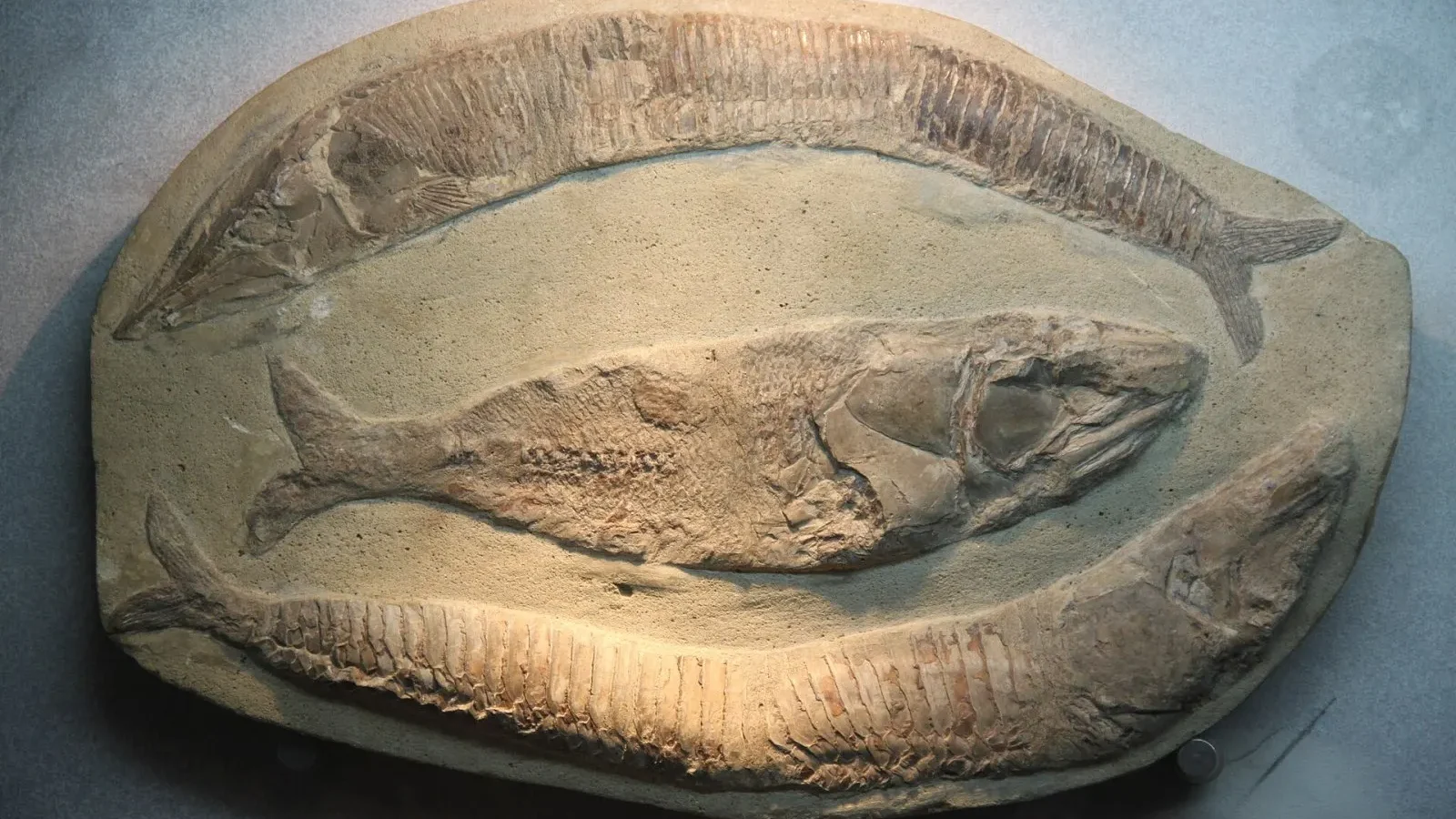
Unlike most fishes today, lobe-finned fishes carried bones inside a fleshy stalk in their fins. The arrangement of these bones shows surprising similarities to the bones in the arms and legs of land vertebrates. Living lungfishes and the coelacanth are the surviving relatives of this ancient group. A series of fossils found since the early twentieth century has shed light, piece by piece, on the steps leading from these fishes to the first four-legged animals; but the picture is still incomplete.
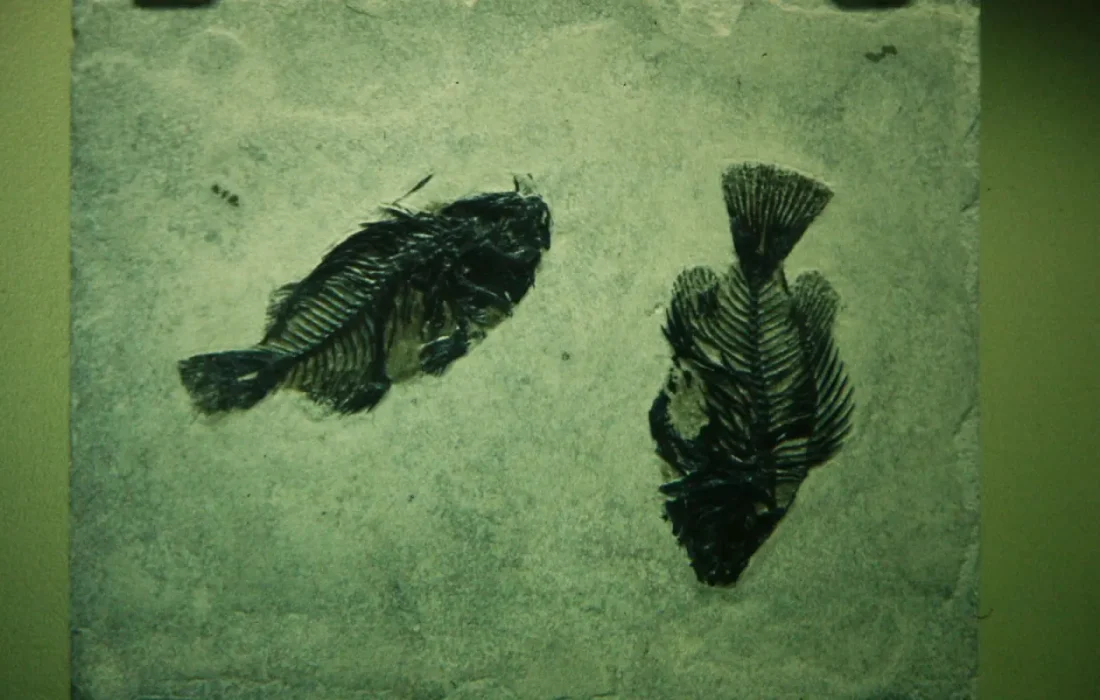
Fossils show not a single moment of evolution but frames from a long process.
Ethan Brooks
Gills and wrists together
The new specimen from East Greenland is a partial skeleton of a creature about 1.2 meters long. The fossil preserves the skull, the shoulder girdle, the bones of the forelimbs and part of the gill arches. What caught the researchers' attention most were the wrist-like joints in the forelimbs. These joints suggest the animal could use its forelimbs to push its body up in shallow water or on a swamp floor. Whether it had digits is not yet certain, because those bones were not preserved.
The fossil also has well-developed gill arches, meaning the creature most likely still breathed largely in water. Computed tomography scans show that the skull had features suited to breathing both in water and in air. This mix of features reveals that the animal was neither fully a fish nor fully a tetrapod, but a transitional form living between two worlds. The team has published a detailed description of the specimen in a peer-reviewed journal.
Its place on the tree of life
The researchers' family-tree analyses place the new species between known transitional forms and the first true tetrapods. But that does not mean it is our direct ancestor. Evolution does not proceed like a straight ladder but like a branching bush; the fossils found are usually not direct ancestors but related lineages that lived at the time. These side branches still help us greatly in understanding which features appeared on the main trunk, and in what order.
| Topic | Evolution & Archaeology |
|---|---|
| Highlights | fossil, evolution, science communication |
| Reading time | 6 minutes |
| Written by | Ethan Brooks |
Key takeaways
- The roughly 370-million-year-old fossil combines gill arches with wrist-like joints.
- The find supports the view that limbs evolved in water before the move onto land.
- The new species is not our direct ancestor but represents a related lineage from the transition period.
The new find also supports the view that limbs evolved in water before the move onto land. In other words, the legs of the first tetrapods may initially have been used not for walking on land but for moving, resting or hunting in shallow, plant-filled waters. Paleontologists think new discoveries in Devonian rocks will further enrich this picture. The team in Greenland plans to begin a new field season next summer in the same region, across a wider area.
What do you think about this post?
Leave a comment