
























































Satellite traffic in the sky is growing: how are astronomers coping with bright trails?
The rapid rise in the number of satellites in low orbit is leaving trails in long-exposure observations and complicating radio astronomy. Astronomers and satellite operators are working together on solutions.
Table of contents
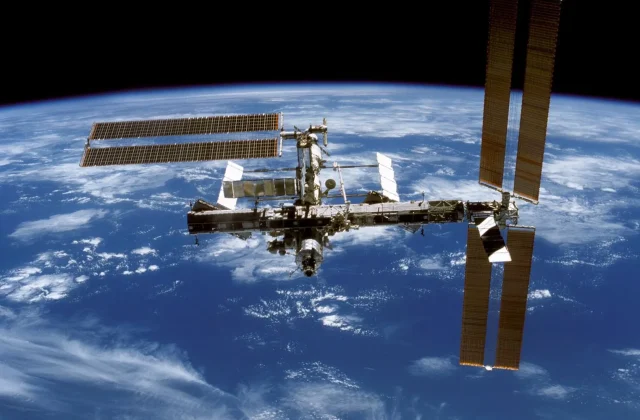
In the past few years, the number of satellites launched into low Earth orbit has surpassed the total from the first sixty years of the space age. Constellations made up of thousands of satellites designed to provide global internet service reflect sunlight in the hours after sunset and before sunrise, leaving bright streaks across the sky. For telescopes carrying out wide-field sky surveys, these trails mean lost data and extra processing. Radio astronomers, meanwhile, worry that signals emitted by the satellites will disrupt sensitive measurements. Working groups that include the Ridgeview Astronomy Center are exploring a range of solutions, from dark coatings to observation-planning software.
New streaks across the night sky
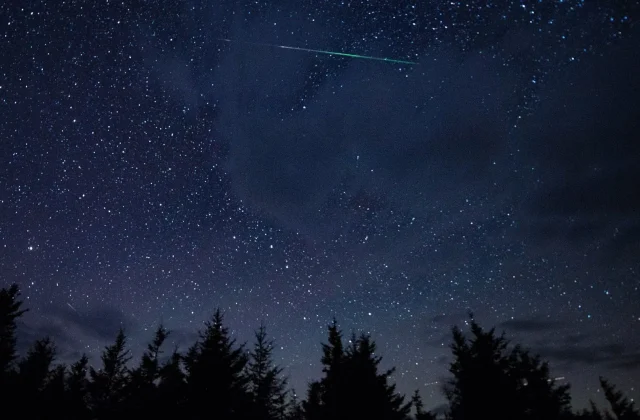
Satellites don't produce their own light; they are visible in the sky because they reflect sunlight. In the hours after sunset and before sunrise, when the ground is in darkness, satellites a few hundred kilometers up can still catch sunlight. That is why seeing bright dots gliding across the sky one after another, especially at twilight, is now a common experience. Newly launched satellites traveling in a line like a string of pearls also surprise many observers.
For naked-eye observers, this is usually little more than an intriguing sight. But for astrophotographers taking long exposures and for telescopes carrying out wide-field surveys, satellites mean bright streaks cutting across their images. New-generation observatories that scan large swaths of the sky quickly and repeatedly in particular may find satellite trails in a significant share of images taken at twilight, and have to deal with them.
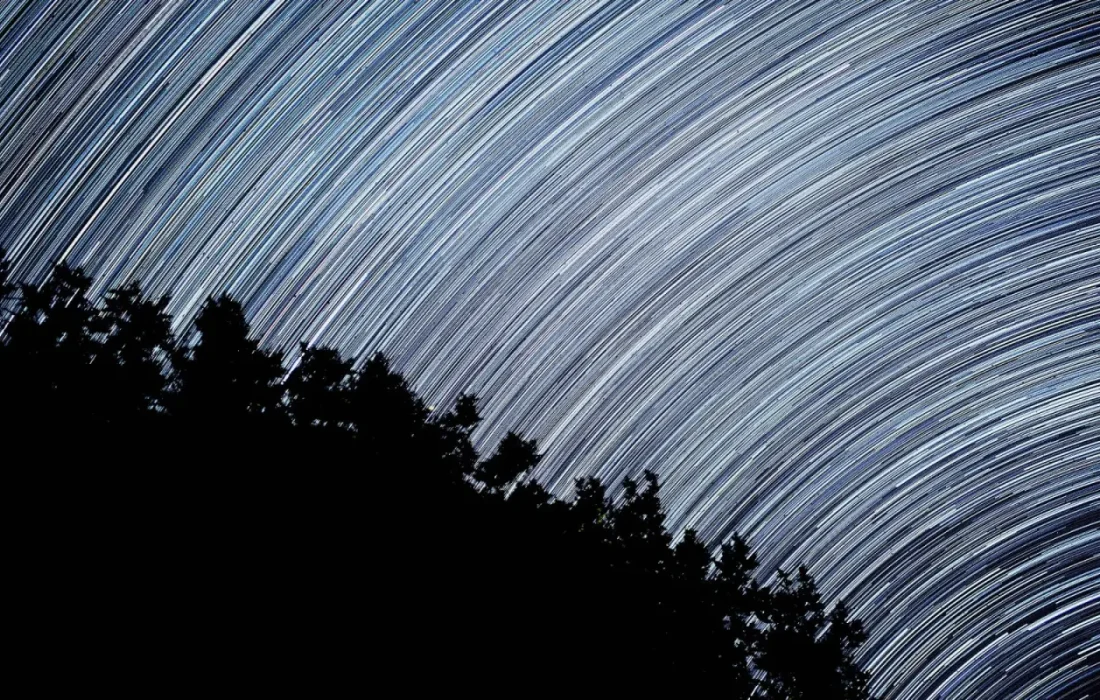
A dark, quiet sky is a shared natural heritage that deserves protection.
Mark Ellison
Lost survey data and radio noise
Satellite trails can largely be cleaned up with image-processing software, but not always without loss. A bright trail can spoil measurements of faint objects beneath it or require the trail area to be masked out entirely. This raises the risk of missing targets that are visible only briefly and have no chance of being observed again, such as asteroids passing close by. Removing the trails also adds extra processing to an already enormous data stream.
For radio astronomers, the problem is even more complex. Radio telescopes are designed to capture extremely faint signals from the depths of the universe. The frequencies satellites use for communication and unintended emissions leaking from their electronics can disrupt these sensitive measurements. Remote observing sites protected as radio quiet zones offer a solution against interference on the ground, but there is no easy way to escape the transmissions from the satellites overhead.
The search for shared solutions
Dialogue between astronomers and satellite operators has increased markedly in recent years. Some operators have tried adding dark coatings and visors that reduce reflected sunlight to their satellites; these measures have significantly lowered the brightness of some satellites. Sharing satellite positions accurately and in advance also makes it easier for observatories to plan their exposures to avoid satellite passes. International working groups are bringing recommended brightness limits together in a shared framework.
| Topic | Space Exploration |
|---|---|
| Highlights | satellites, telescope, space exploration |
| Reading time | 6 minutes |
| Written by | Mark Ellison |
Key takeaways
- Because satellites reflect sunlight, they leave bright trails, especially at twilight.
- Satellite trails can cause data loss in surveys, and radio emissions can corrupt measurements.
- Dark coatings, position sharing and removal software are among the shared solutions.
Researchers from the Ridgeview Astronomy Center are also contributing to the development of open-source software that automatically detects and removes satellite trails. Dr. Michael Archer, who is responsible for sky quality at the center, stresses that the problem is not only a scientific one: a dark, quiet sky is a natural heritage shared by all humanity. According to Archer, it is possible to strike a balance between the benefits of access to space and the protection of the sky, provided that balance is considered from the design stage onward.
What do you think about this post?

Leave a comment