


























Curiosity Week kicks off: observing nights, hands-on workshops and planetarium shows
Sponsored contentThis content was produced as an advertisement / partnership.
Organized by the Ridgeview Astronomy Center, Curiosity Week brings science to visitors of all ages from 23 to 29 November.
Table of contents
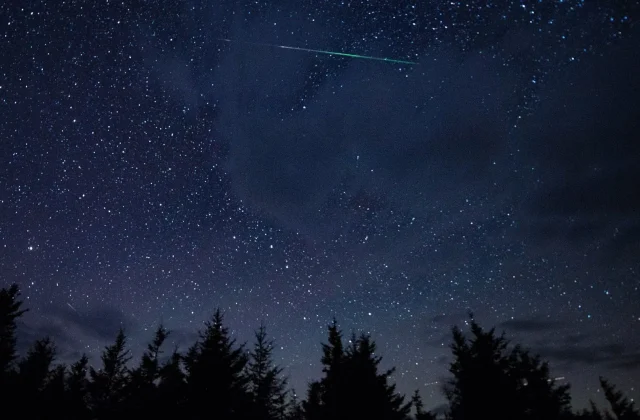
With Curiosity Week, held this year for the fourth time, the Ridgeview Astronomy Center opens its doors to visitors of all ages from 23 to 29 November. The weeklong event features hands-on workshops for children, robotics and coding sessions for teens, chat sessions with scientists for adults and planetarium shows every evening. The most anticipated part of the program is the public observing with telescopes set up in the center's garden, weather permitting. With the event week coinciding with the full moon, it is a good chance to view the craters and mountains on the lunar surface; Saturn in the evening sky will be the telescopes' other favorite.
The program: every shade of science in one week
Curiosity Week will open on the morning of Monday, 23 November, with activities for school groups and close on the evening of Sunday, 29 November, with an observing night open to families. On weekdays, mornings are reserved for elementary and middle school students, and afternoons for high school and university students. Evening programs and weekend events are open to visitors of all ages. Most events are free; workshops and planetarium shows require advance registration because places are limited.
Four main themes stand out in this year's program: the sky, light and color, motion and energy, and the living world. Each theme has its own exhibition area and interactive experiment stations. At the evening chat sessions, astrophysicists, biologists and engineers will meet visitors curious about their research. The chance to ask scientists questions directly was one of the parts participants liked most in previous years.
Science is less the answer to the first question than the second question that follows it.
Emily Carter
Hands-on workshops for kids
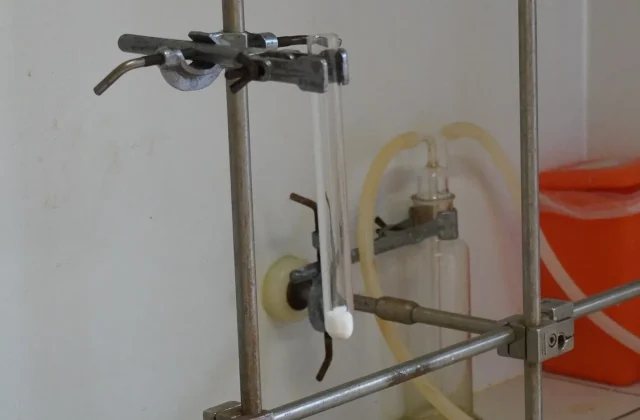
The children's workshops focus on experiments that can be done with everyday materials. Participants will grow their own crystals with kitchen ingredients, build a simple periscope from cardboard and mirrors, and see with their own eyes how a prism splits light into colors. In another workshop, children will launch small model rockets with compressed air, exploring the concepts of thrust and friction in a fun way. All workshops will be run under instructor supervision and in line with safety rules.
The aim of the workshops is not just to repeat experiments but to encourage children to ask questions and make predictions. Just before each experiment, instructors ask participants to predict what will happen and then compare the result with their predictions. This approach lets children experience the basic steps of the scientific method through play. After the workshops, children will also receive a colorful experiment notebook describing simple, safe experiments they can do at home with their families.
The full moon and Saturn at the eyepiece
The most anticipated part of Curiosity Week is the public observing held every evening in the center's garden, weather permitting. The event week coincides with the full moon on 24 November. While a full moon is not ideal for deep-sky observing, it offers an impressive view for anyone who wants to explore the lunar surface through a telescope. Especially on the evenings before and after the full moon, the shadows of craters and mountains along the boundary between the lit and dark regions look far more pronounced.
| Topic | Physics |
|---|---|
| Highlights | science communication, telescope, sky events |
| Reading time | 4 minutes |
| Written by | Emily Carter |
Key takeaways
- Curiosity Week takes place at the Ridgeview Astronomy Center from 23 to 29 November.
- Advance registration is required for children's workshops and planetarium shows.
- Weather permitting, the Moon and Saturn will be observed through public telescopes every evening.
Saturn, in the southern sky in the evening, will be the telescopes' other favorite. Despite the narrow angle of its rings, seeing the planet itself and its largest moon, Titan, is an unforgettable experience for many visitors. Volunteer amateur astronomers will support the center's team in setting up telescopes and guiding the observations. On cloudy evenings, extra planetarium shows will take the place of observing. The full program has been published on the center's website.
What do you think about this post?
Leave a comment