






























































A milestone for quantum computers: why error correction changes everything
Combining physical qubits into more reliable logical qubits is seen as the most critical step on the road to useful quantum computers.
Table of contents
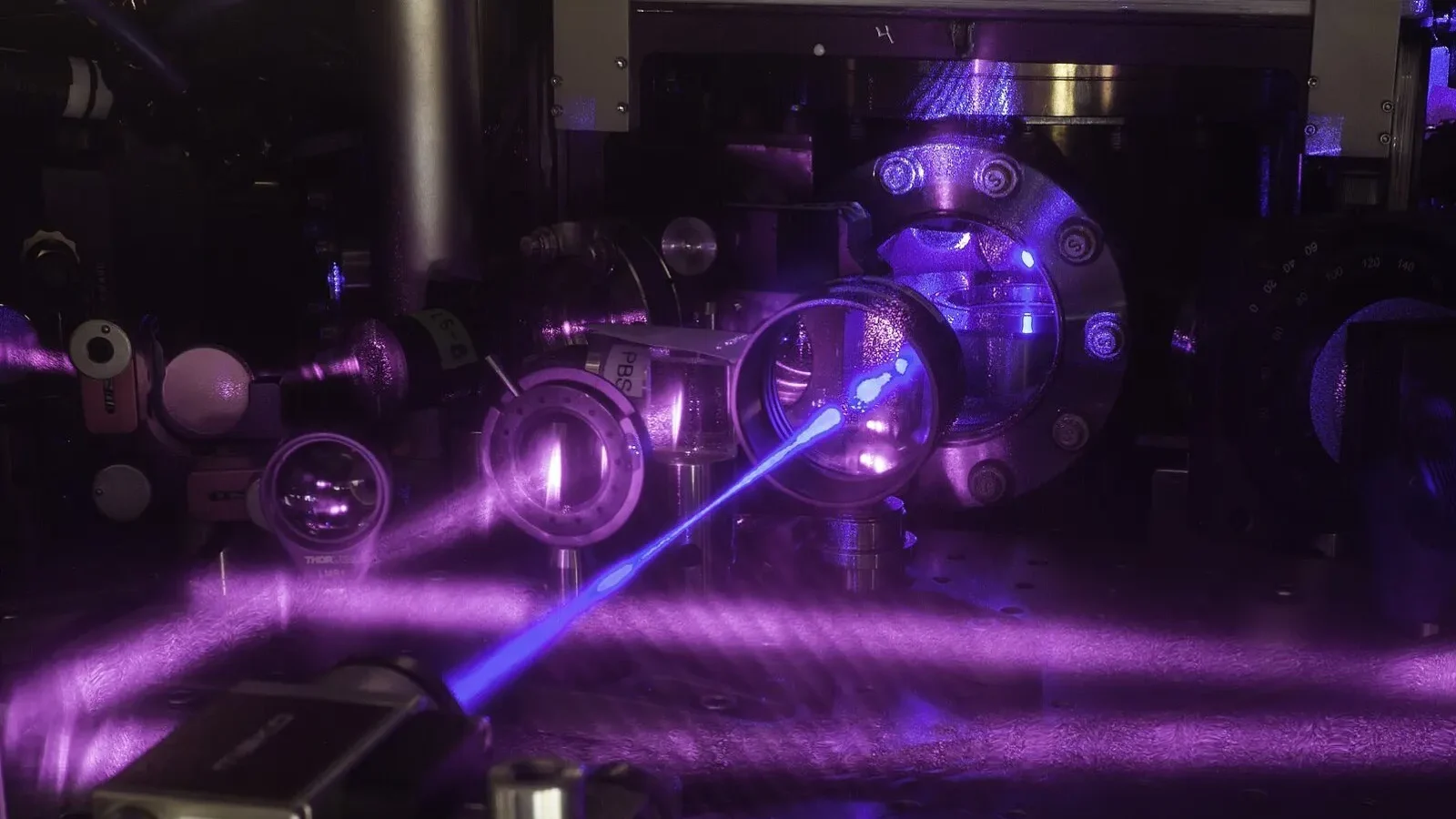
The computing power quantum computers promise comes from the quantum properties, such as superposition and entanglement, of units called qubits. But these properties are extremely fragile: the slightest heat, vibration or electromagnetic noise from the environment can corrupt a calculation. That is why researchers are focusing on combining many physical qubits into logical qubits that continuously correct errors. In recent years, several groups have shown that it is possible to reach the below-threshold regime, where the error rate falls as the number of qubits grows. In our video report, filmed at the Riverside Quantum Technologies Lab, we take a close look at an experimental setup operating at temperatures near absolute zero. These setups are complex cooling systems designed to shield qubits from the noise of the outside world.
Why is a qubit so fragile?
In classical computers, information is stored in bits that take the value 0 or 1. Qubits, thanks to superposition, can carry a combination of both states at once, and multiple qubits can be linked through entanglement. These properties could make it possible to solve certain problems far more efficiently than classical computers can. But superposition is extremely delicate: when a qubit has even the slightest interaction with its surroundings, the quantum information is corrupted. Physicists call this process decoherence.
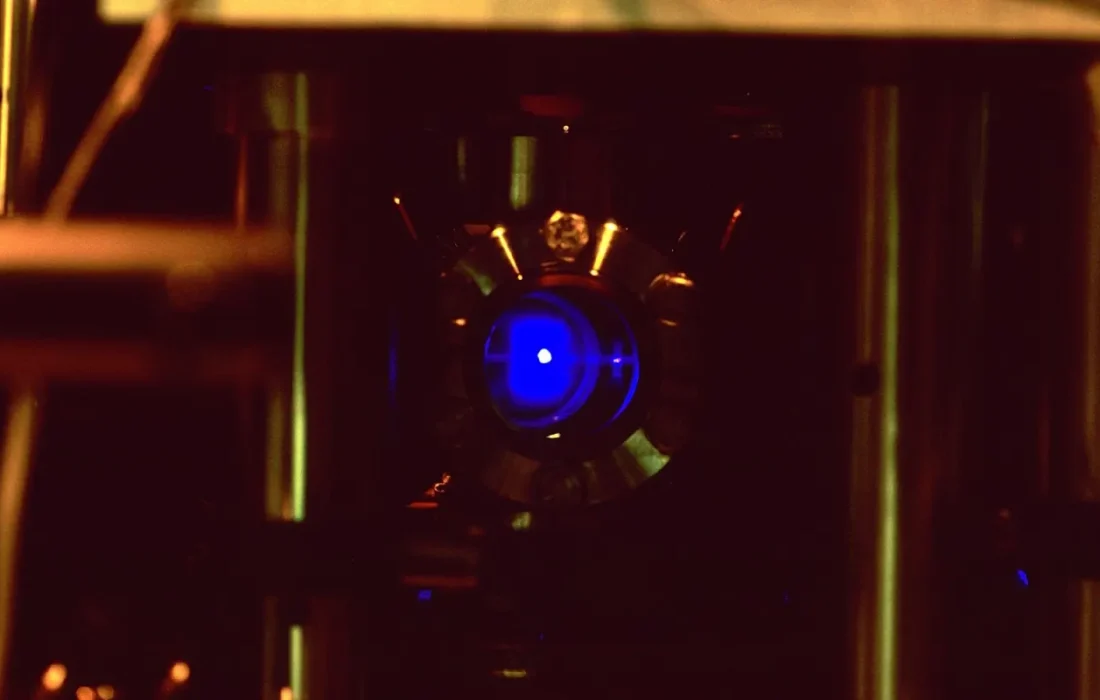
Today, one of the most widely used types of qubit is made from superconducting circuits. These circuits are operated just a few thousandths of a degree above absolute zero, at about 10 millikelvin. Even at such low temperatures, qubits can typically hold their information for between a ten-thousandth and a thousandth of a second. The number of operations that can be performed in that time is limited, and each operation carries a small margin of error. For useful calculations requiring millions of operations, these errors must be brought under control.
Building a quantum computer is really about learning to live at peace with errors.
Sarah Bennett
Logical qubits and the threshold theorem
A simple way to correct errors in classical computers is to copy the information several times and go with the majority. In the quantum world, however, the laws of physics make it impossible to copy an unknown quantum state exactly. Scientists get around this obstacle by spreading the information not over a single qubit but across many entangled physical qubits. Additional helper qubits measure only whether an error has occurred, without disturbing the actual information. A unit built this way, whose errors are continuously corrected, is called a logical qubit.
The threshold theorem says that once the error rate of physical qubits falls below a certain limit, adding more qubits will rapidly reduce the logical qubit's error rate. In other words, the system becomes more reliable as it grows. For many years, experiments stayed above this threshold; adding qubits increased errors instead of reducing them. In recent years, several research groups have shown with methods such as the surface code that the error rate really does fall as the code size grows. This is regarded as an important milestone for the field.
A lab just above absolute zero
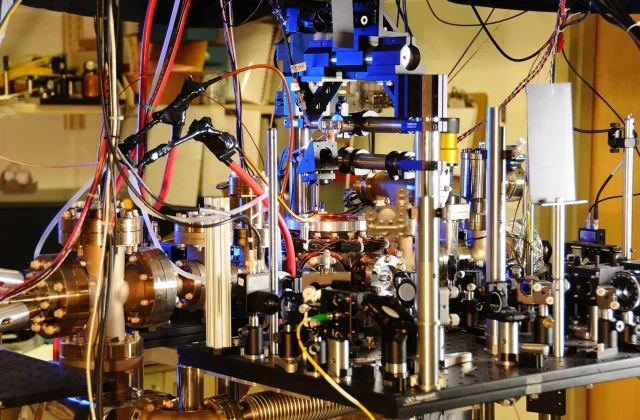
The experimental setup we filmed at the Riverside Quantum Technologies Lab looks at first glance like a gold chandelier hanging from the ceiling. Called a dilution refrigerator, the system consists of plates that cool layer by layer, reaching about 10 millikelvin at the bottom plate. That is far colder even than the average temperature of outer space. The qubit chip is placed on this bottom layer, and its connection to the outside world is made through specially filtered cables.
| Topic | Physics |
|---|---|
| Highlights | quantum, artificial intelligence, metrology |
| Reading time | 6 minutes |
| Written by | Sarah Bennett |
Key takeaways
- Qubits are powerful thanks to superposition and entanglement, but extremely sensitive to environmental noise.
- Logical qubits are built from many physical qubits by continuously correcting errors.
- Superconducting qubits operate near absolute zero, at about 10 millikelvin.
The lab's team is currently testing error correction protocols on a chip made up of a few dozen qubits. Project lead Dr. Eva Yates explains that their goal is not to compete with large teams on qubit count but to develop qubit designs that make fewer errors and new correction methods. According to Yates, there is still a long road to useful quantum computers, but progress in error correction means that road can now be seen much more clearly.
What do you think about this post?

Leave a comment