




































Astrophysicist Prof. Natalie Kerr: ‘We now both see and hear the universe’
We talked merging black holes, space-based detectors and young researchers with Prof. Natalie Kerr, who leads the gravitational-wave group at the Ridgeview Astronomy Center.
Table of contents
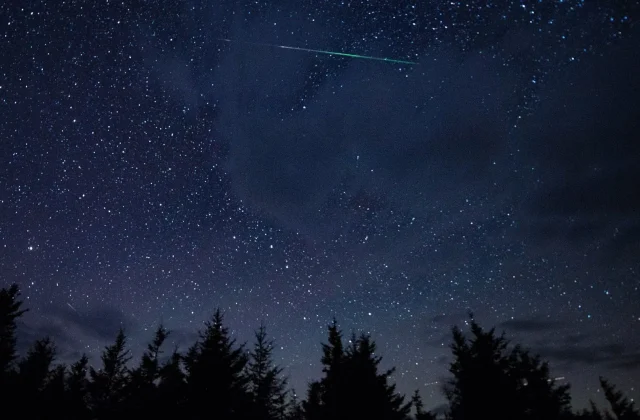
First detected directly in 2015, gravitational waves gave astronomy a brand-new sense alongside light. Since then, hundreds of signals from merging pairs of black holes and neutron stars have been recorded. Prof. Natalie Kerr, who leads the gravitational-wave group at the Ridgeview Astronomy Center, and her team develop data analysis methods that tease faint traces out of these signals. In this episode of our podcast series, we talked with Kerr about how ripples in space-time are measured, what the space-based detectors planned for launch in the 2030s promise, and her advice for young researchers interested in the field. You can listen to the full interview as a podcast and read the highlights below.
Measuring the trembling of space-time
We began our conversation with the most basic question: what exactly is a gravitational wave? Kerr's answer is remarkably simple: when massive objects move rapidly, they create ripples in the fabric of space-time that travel at the speed of light. As these waves pass, they stretch and squeeze distances very slightly. "To explain how tiny the effect is, I put it this way: the change we measure in a detector arm kilometers long is smaller than a hundredth of the diameter of a proton," she says.
The measurement is made with setups called laser interferometers. When laser beams sent down two long, perpendicular arms reflect off mirrors at the ends and recombine, the slightest difference in arm length changes the light's interference pattern. Kerr explains that the biggest challenge is isolating the detector from seismic vibrations, thermal noise and even quantum noise. Rather than building detectors directly, her own group develops analysis methods that pull faint signals out of the noise in the recordings.
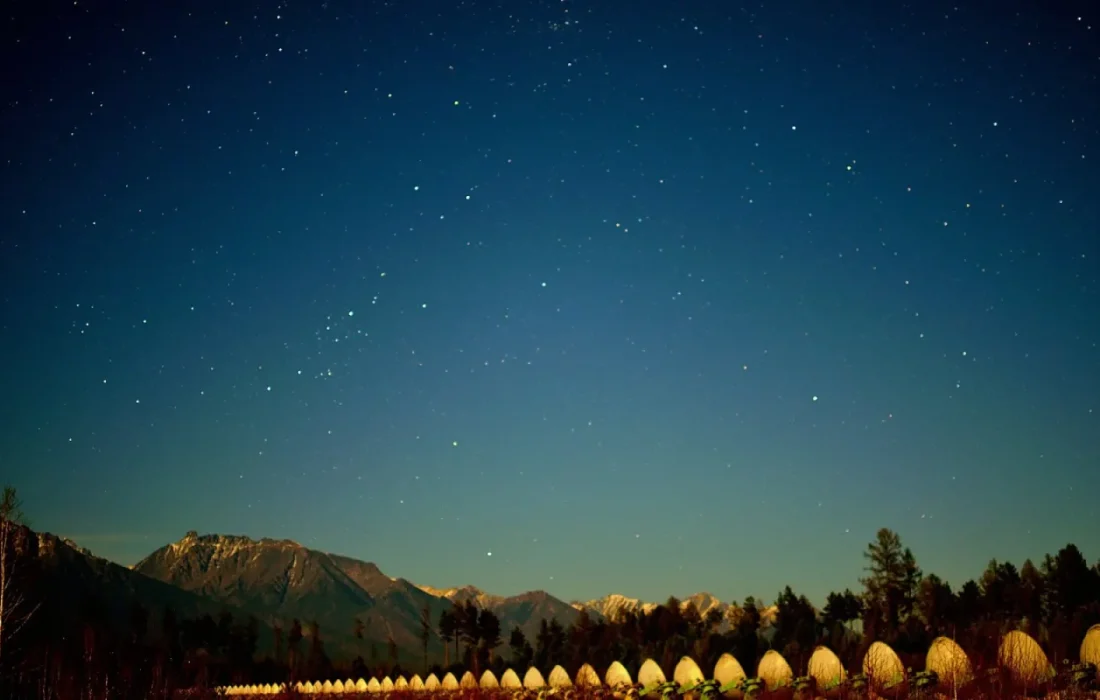
Gravitational waves are like whispers from the dark corners of the universe.
Ethan Brooks
Messages from black hole pairs
Most of the recorded signals come from pairs of black holes that spiral toward each other and eventually merge. Kerr explains that each signal holds information about the black holes' masses, spins and distance from us. "By putting this information together, we have started to take a kind of census of how black holes in the universe form and grow," she says. Some signals, however, reveal black holes with masses that stellar evolution models did not expect, raising new questions.
For Kerr, one of the most exciting moments in the field came in 2017, when gravitational waves from the merger of two neutron stars were observed together with light from the same event. That joint observation provided strong evidence that some of the heavy elements, such as gold and platinum, are produced in such collisions. She notes that space-based detectors planned for launch in the 2030s, with arms millions of kilometers long, will be able to hear mergers of the giant black holes at the centers of galaxies. "Then we'll be listening to an entirely different universe," she says.
Advice for young researchers
In the final part of the interview, we asked Kerr what she would recommend to young people interested in the field. Her first piece of advice is to build a solid foundation in physics and mathematics. "Gravitational-wave astronomy brings together very different skills, from general relativity to statistics, from optics to computer programming. You don't need to be an expert in all of them, but you do need to understand the language of each," she says. In her view, programming has become one of an astrophysicist's most essential tools today and is well worth learning early.
| Topic | Interviews |
|---|---|
| Highlights | science communication, telescope, space exploration |
| Reading time | 8 minutes |
| Written by | Ethan Brooks |
Key takeaways
- Gravitational waves are measured as extremely tiny stretches and squeezes in space-time.
- Signals from black hole mergers offer new clues about how black holes form.
- Kerr advises young people to strengthen their physics fundamentals and programming skills.
Kerr also stresses that large international collaborations offer important opportunities for young researchers. In these projects, where thousands of scientists work together, it is possible to contribute to data analysis and theoretical work from universities all over the world. "Science is now done beyond borders. What matters is asking a good question and pursuing it patiently," she says. You can listen to the full interview in the new episode of our podcast series and send us any questions you are curious about.
What do you think about this post?
Leave a comment