




























































Mars’s icy past: near-surface ice at mid-latitudes may be more widespread than thought
Re-examining orbital radar data, an international team suggests that extensive ice sheets may lie a few meters below the surface at Mars's mid-latitudes.
Table of contents
It has long been known that Mars's polar caps hold large amounts of water ice. But what really matters for future crewed missions is whether ice can be reached in regions closer to the equator and better suited to landing. Re-examining data collected over the years by radar instruments in orbit with a new method, an international team suggests that extensive ice sheets may lie just a few meters below some mid-latitude plains. The study, still a preprint that has not yet passed peer review, has drawn keen interest in scientific circles; even so, the findings need to be confirmed by measurements on the surface. In this article, we look at the study's method, its findings and what it means for future missions.
From the poles to the mid-latitudes
Mars's north and south poles hold layers of water ice up to several kilometers thick. In winter, a cover of frozen carbon dioxide is added on top of these layers, and in summer it sublimates back into the atmosphere. Although polar ice offers a valuable archive of the planet's climate history, it is not considered a practical resource for future crewed missions. Harsh winter conditions, long periods of darkness and insufficient solar power in the polar regions make setting up a long-term base very difficult.
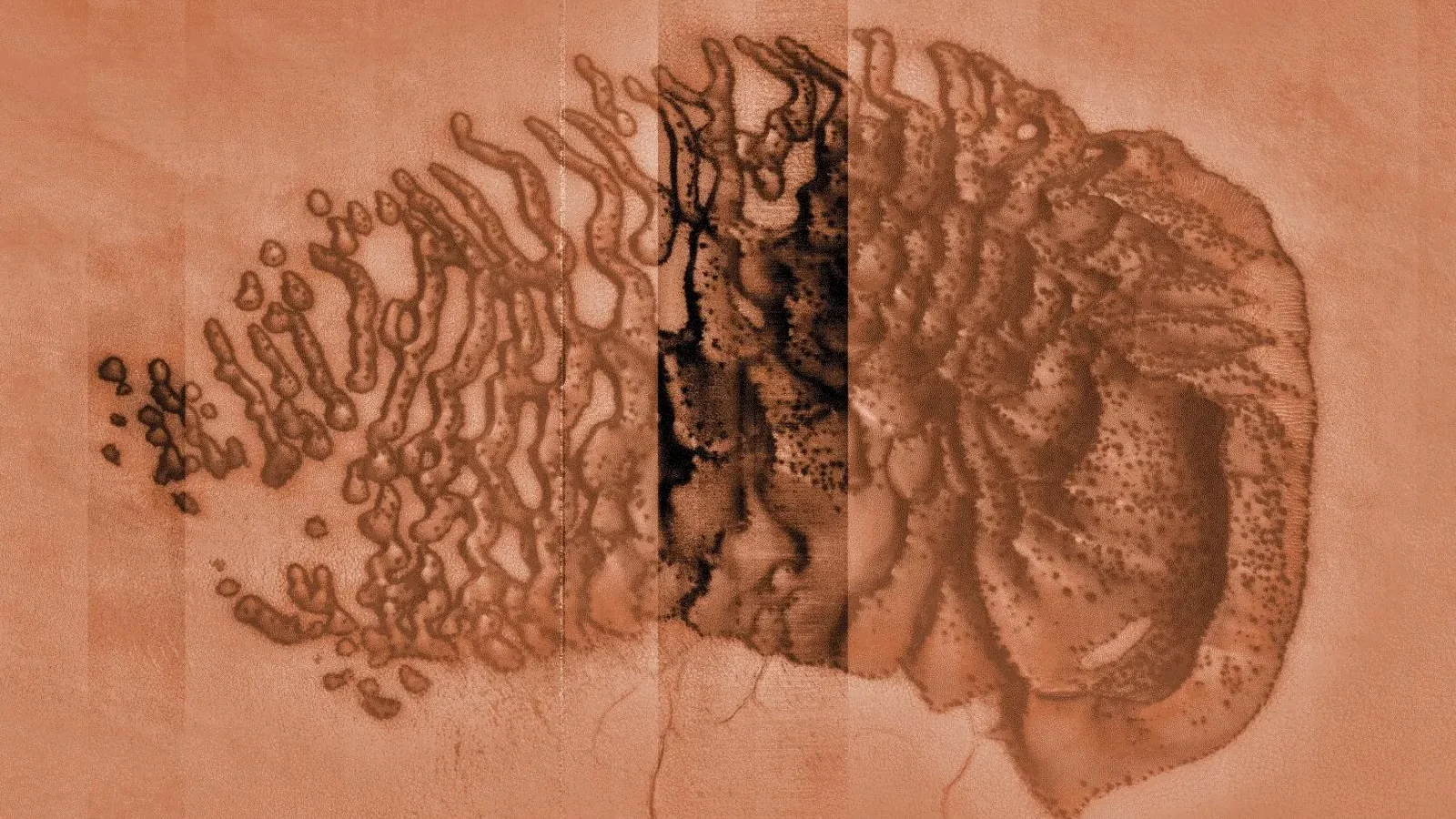
That is why scientists have long focused on ice sources at the mid-latitudes. High-resolution images from orbit had revealed bright traces of ice exposed around some young impact craters, as well as glacier-like flow features. These findings suggested that ice preserved beneath a cover of dust and rock might be found closer to the equator than previously thought. But the questions of how widespread this ice is and how far below the surface it begins had not yet been fully answered.
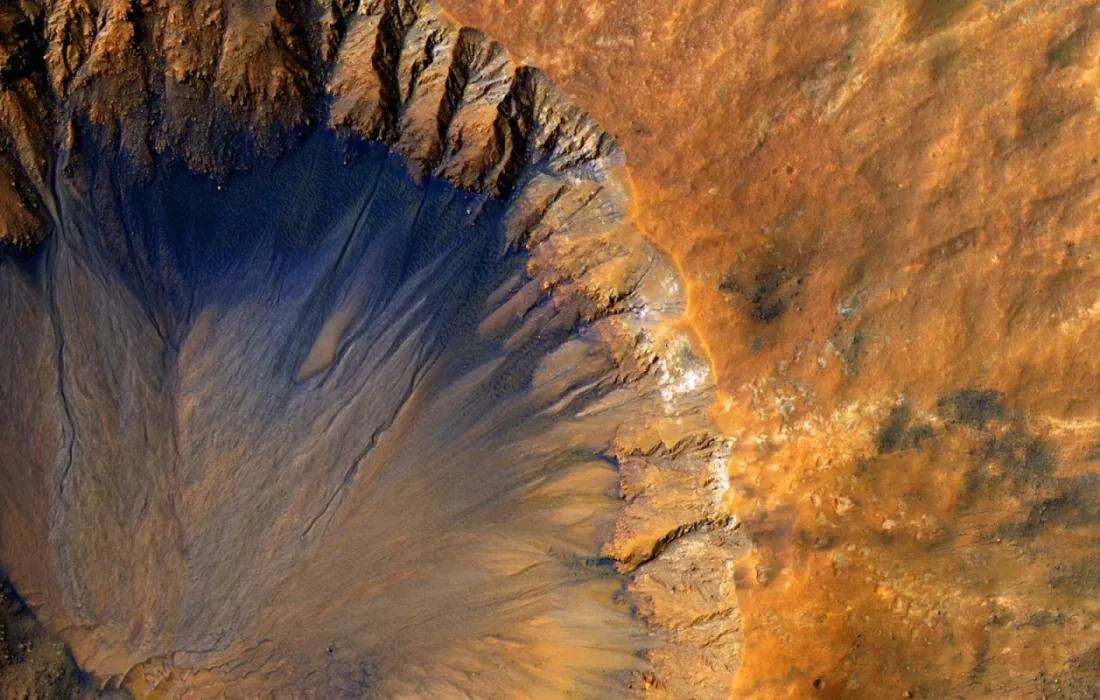
Searching for water on Mars is really about reading the planet's climate history.
Mark Ellison
Rereading radar signals
Radar instruments in orbit measure how the radio waves they send toward the Martian surface reflect off the surface and the layers beneath it. Because different materials such as ice, rock and dust transmit and reflect radio waves differently, these reflections carry clues about the structure of the subsurface. But layers very close to the surface can get lost in the strong reflection from the surface itself. This is a long-known technical problem that makes it hard to study the first few meters with radar.
To get around this problem, the international team developed a new statistical method that combines many radar measurements taken over the years as the spacecraft passed over the same regions at different angles. By modeling and separating out the surface reflection, the method lets the faint signals just beneath it be seen more clearly. According to the team's analysis, the scenario that best explains the data is that layers of nearly pure ice lie just a few meters below the surface in some broad mid-latitude plains. Even so, the researchers stress that the result is not yet conclusive.
What it means for future missions
If the findings are confirmed, these regions could be an important resource for future astronauts on Mars. Water can be used not only for drinking but also for growing plants, producing oxygen and making rocket fuel by splitting water into hydrogen and oxygen. Such in-situ resource use could greatly reduce the load that has to be carried from Earth. On top of that, the mid-latitude plains offer milder conditions, more sunlight and safer landing sites than the poles.
| Topic | Space Exploration |
|---|---|
| Highlights | Mars, space exploration, satellites |
| Reading time | 6 minutes |
| Written by | Mark Ellison |
Key takeaways
- It has long been known that Mars's poles hold large layers of water ice.
- A new analysis suggests extensive ice layers may lie a few meters below the surface at mid-latitudes.
- If confirmed, the findings could mean an important water source for future crewed missions.
Underground ice is also of great scientific importance. Ice layers may preserve a record of how the climate fluctuated along with long-term changes in Mars's axial tilt. Some researchers also think chemical traces of possible past life may have been preserved in or around the ice. The answers to these questions will most likely come from future missions that land on the surface and drill directly into the ice to take samples. Until then, radar data will continue to light the way.
What do you think about this post?
Leave a comment