































































Obsidian tools found in a Taurus Mountains cave map the routes of Ice Age hunters
The chemical fingerprint of obsidian tools recovered in a Steppe Institute of Archaeology excavation points to a raw-material journey of more than 300 kilometers.
Table of contents
Three years of excavations at Redstone Cave in the western Taurus Mountains closed this season with a striking find. The team led by Assoc. Prof. Alice Turner of the Steppe Institute of Archaeology found hundreds of obsidian tool fragments in layers dated to around 28,000 years ago. Analyses with a portable X-ray fluorescence device show that the tools' raw material came from volcanic sources in Cappadocia, more than 300 kilometers away. The result suggests that hunter-gatherer groups living in Anatolia during the last glacial period either ranged across a wide area or exchanged raw materials with one another. The team is preparing to submit its findings to a peer-reviewed journal. The discovery could significantly enrich what we know about Anatolian prehistory.
Three years at the dig site
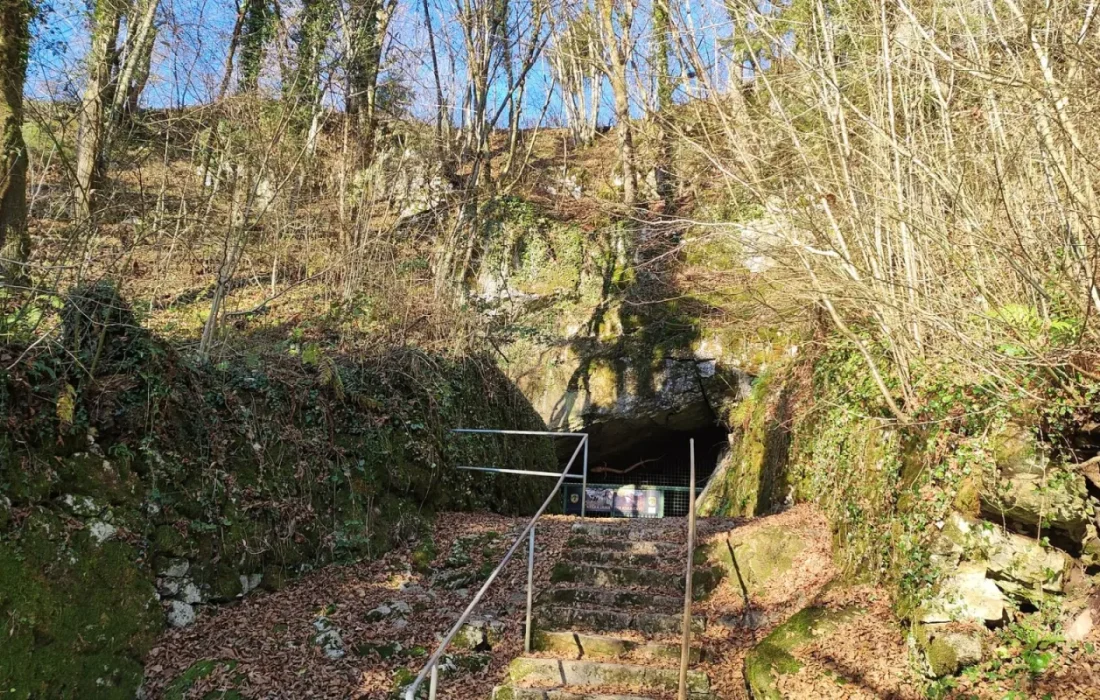
Redstone Cave sits about 1,200 meters above sea level in the western Taurus Mountains, on a limestone slope overlooking a narrow valley. The cave was first noticed during a surface survey by a local caving club; a few stone tool fragments found on the slope at the entrance caught archaeologists' attention. Since 2024, the Steppe Institute of Archaeology team has been carefully examining the sediments at the cave entrance layer by layer in excavations lasting about two months every summer.
So far, the excavation has reached a depth of four meters and identified at least six separate phases of use. What drew the team's attention most were the middle layers, dense with hearth remains, where thousands of burned bone fragments were found together with ash layers. Charcoal samples from these layers were radiocarbon-dated to about 28,000 years ago. Most of the bones belong to animals living in mountainous terrain, such as wild goats and deer, suggesting the cave was used as a seasonal hunting camp.
Every piece of obsidian keeps a trace of the day it left its source in its chemistry.
Ethan Brooks
The chemical fingerprint of obsidian
Obsidian is a natural volcanic glass formed when lava cools very quickly, and it produces extremely sharp edges when it breaks. That made it a highly prized raw material for prehistoric communities. For archaeologists, obsidian has another important property: obsidian from each volcanic source has its own distinctive trace-element composition. This chemical fingerprint makes it possible to determine, with great reliability, which volcano a tool came from, and helps trace ancient trade routes.
The team analyzed 214 obsidian pieces found in the cave with a portable X-ray fluorescence device. The method can measure the proportions of elements in a sample within minutes without damaging it. The results showed that most of the pieces match volcanic sources in Cappadocia, in central Anatolia. The source of a small group of pieces has not yet been identified. Assoc. Prof. Alice Turner notes that, to confirm the results, some of the samples will also be examined in the lab using more detailed and precise methods.
Ice Age mobility in Anatolia
About 28,000 years ago, the Earth was heading toward the coldest phase of the last glacial period. Glaciers in Anatolia's high mountains were far more extensive than today, and open, steppe-like landscapes were widespread in the interior. Hunter-gatherer groups living in these conditions are thought to have ranged over large areas, following the seasonal movements of game. The obsidian in the cave could be concrete evidence that these groups moved regularly between the Taurus Mountains and central Anatolia.
| Topic | Evolution & Archaeology |
|---|---|
| Highlights | archaeology, evolution, volcano |
| Reading time | 7 minutes |
| Written by | Ethan Brooks |
Key takeaways
- The hearth layers at Redstone Cave were dated to about 28,000 years ago.
- Chemical analysis showed the obsidian came from Cappadocian sources more than 300 kilometers away.
- The findings suggest Ice Age hunters ranged widely or traded with one another.
Another possibility is that the obsidian reached the cave by passing from hand to hand, that is, through exchange networks between groups. Turner says the two scenarios are not mutually exclusive and that the truth is most likely a mix of both. In the coming seasons, the team aims to carry out similar analyses in other caves in the region and build a map of how raw materials circulated. That map will be an important step toward understanding the social ties between Ice Age communities in Anatolia.
What do you think about this post?
Leave a comment