
















































A robot colleague in the lab: autonomous chemistry systems that plan their own experiments
When robotic arms team up with learning algorithms, hundreds of experiments can run back to back without human intervention. The Highland Robotics and Autonomy Lab is using the approach to search for new battery electrolytes.
Table of contents
Can a chemist's weeks-long series of experiments be squeezed into a few days? Systems known as self-driving laboratories say yes. Robotic arms measure and mix liquids, analytical instruments measure the result, and a learning algorithm looks at the data to choose the conditions for the next experiment. The team at the Highland Robotics and Autonomy Lab is using this closed loop to find longer-lasting battery electrolytes. According to the researchers, the machine can run experiments without tiring, but humans still decide which question to ask, how to interpret the results and which safety rules apply. In this article, we look at how the system works, its first results and how it is transforming the role of scientists.
Closed loop: measure, learn, try again
In a traditional chemistry lab, a researcher plans an experiment, prepares materials, runs the experiment, measures the result and decides on the next step. Autonomous labs hand every link in that loop over to machines. Robotic arms and liquid-handling systems prepare samples, analytical instruments take measurements and all data flow directly to a computer. The brain of the loop is an algorithm that learns from the results and predicts which experiment will yield the most information.
These algorithms are often based on methods such as Bayesian optimization. Put simply, the system uses the data gathered so far to build a prediction map for all possible conditions and chooses new experiments by balancing regions that look promising with those not yet explored enough. Instead of trying millions of possible mixtures one by one, it can reach a good result with a few hundred cleverly chosen experiments. The approach is especially valuable in fields where experiments are expensive and time-consuming.
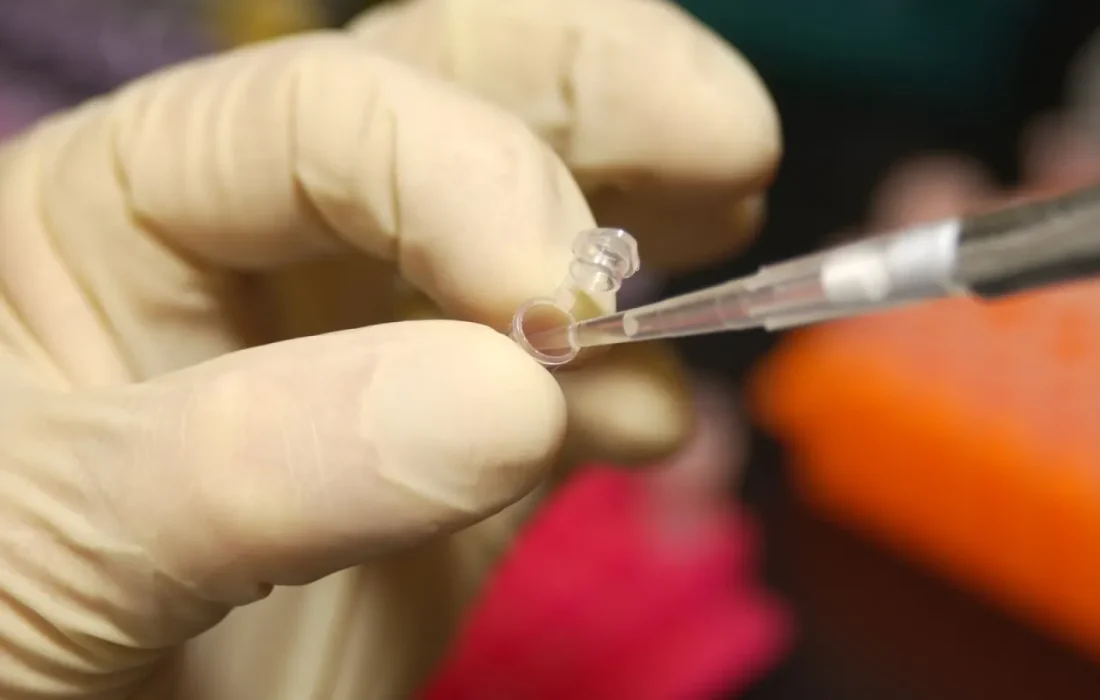
The robot runs the experiment, but a human still asks the question.
Sarah Bennett
A faster search for battery electrolytes
The system at the Highland Robotics and Autonomy Lab is searching for electrolyte mixtures that could extend the life of lithium-ion batteries. The electrolyte is the liquid medium through which ions move between a battery's two terminals; the proportions of solvents, salts and additives in it directly affect the battery's performance. Lab head Assoc. Prof. Owen Sawyer explains that the system can prepare nearly 60 mixtures a day and measure their conductivity and stability. That work used to take a whole research group weeks.
In its first six months, the system tested nearly 3,000 mixtures and highlighted a combination of additives the team had not previously considered. Test cells made with this mixture lost less capacity than the reference electrolyte after hundreds of charge and discharge cycles. But Sawyer stresses that the results were obtained in small lab cells and need to be tested at commercial battery sizes, at different temperatures and over longer periods. The team plans to publish the findings in the coming months.
Where the human scientist fits in
Autonomous labs are often presented as machines that will replace scientists, but researchers in the field tell a different story. Humans decide what the system will optimize, which materials are safe and the boundaries of the experimental space. When the algorithm finds an unexpected result, it is still up to chemists' knowledge and intuition to tell whether it is a real discovery or a measurement error. According to Sawyer, the machine is a truly powerful tool only in the hands of an experienced researcher.
| Topic | AI & Robotics |
|---|---|
| Highlights | robotics, artificial intelligence, metrology |
| Reading time | 6 minutes |
| Written by | Sarah Bennett |
Key takeaways
- Autonomous labs automate the loop of running experiments, measuring and choosing the next step.
- In the battery electrolyte study, the system tested about 3,000 mixtures in six months.
- Defining the question, safety and interpreting the results are still human responsibilities.
The approach also brings some new responsibilities. Labeling large automatically generated datasets correctly, spotting equipment failures in time and recording experimental conditions completely are critical if other labs are to reproduce the results. And because these systems are expensive to set up, there is debate about the risk of research groups with limited resources falling behind. To get around this, some universities propose setting up autonomous labs as shared facilities open to remote access.
What do you think about this post?

Leave a comment