































































Turkish coffee over embers: everything about the perfect harmony of cezve, ash and foam
From the fineness of the grind to the size of the pot, how to protect the foam on a Turkish coffee brewed slowly over hot embers.
Turkish coffee is a tradition of brewing and sharing that UNESCO added to its list of the Intangible Cultural Heritage of Humanity in 2013. Its oldest form is coffee brewed slowly over embers or hot sand. In a pot that heats gently, the coffee rises without breaking its foam and develops a richer aroma. For this article we spoke with a coffee roaster and with a man who has run a traditional coffeehouse for forty years. We gathered every detail, from the roast level of the beans and the fineness of the grind to the ratio of water to coffee and the size of the cezve, the small long-handled pot it's brewed in. If you can't cook over embers at home, you'll find practical ways to brew a foamy coffee on the stovetop at the end of the article.
Beans, grinding and freshness
The flavor of Turkish coffee starts with the roast. The coffee roaster we spoke to explains that medium-roast beans are preferred for Turkish coffee, while very dark roasts leave a bitter, burnt taste. Letting the roasted beans rest for a few days is important for the aroma to settle. The smell of freshly roasted coffee is instantly distinguishable from stale coffee. The roaster says the origin of the beans also shapes the flavor, since beans from different regions offer different aromas, which is why blends are put together with such care.
The fineness of the grind is the defining feature that sets Turkish coffee apart from other coffees. It should be ground as fine as possible, almost to the texture of flour. Because ground coffee loses its aroma quickly, buy it in small amounts and store it in an airtight, lightproof container. Ideally, you'd grind the coffee right before brewing, though that may not be possible in every home. Hand grinders are a good option for grinding at home, but you'll need one that can reach a Turkish coffee grind.
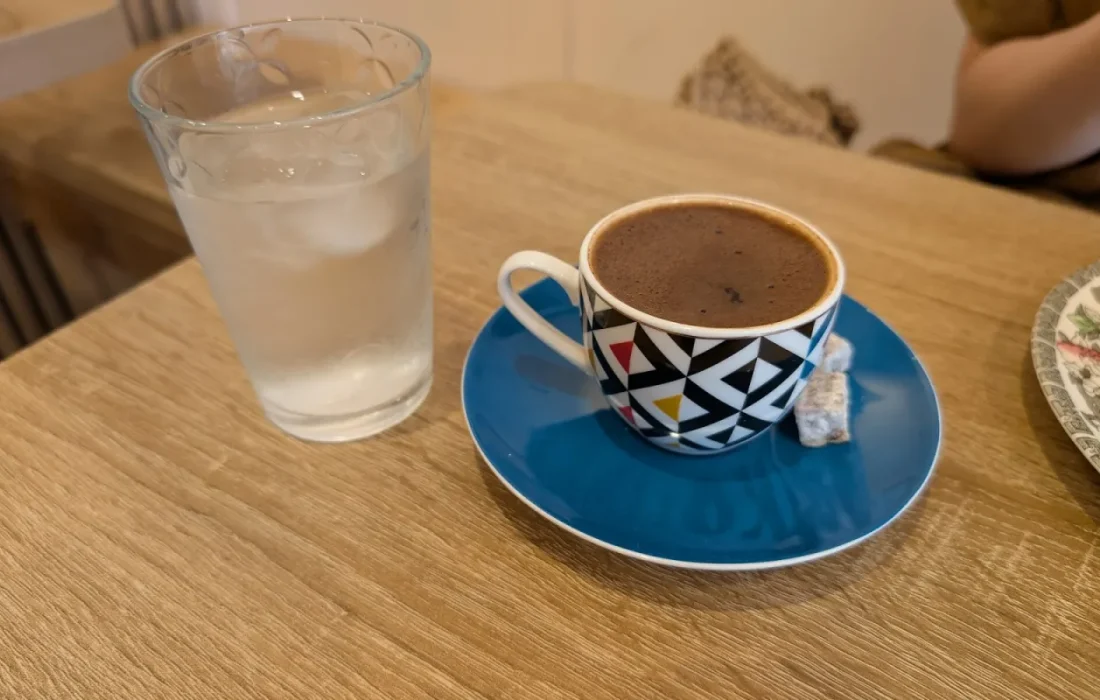
The foam on a coffee shows how much care the host has taken.
Jake Morales
Embers or stovetop?
Coffee brewed over embers or hot sand heats far more slowly than coffee made on the stovetop. That slow heating lets the foam rise without breaking up and allows the aroma to develop fully. The man who has run his coffeehouse for forty years says coffee brewed over embers takes more than a minute, and that this time defines the coffee's character. He explains that coffee brewed over embers has a more velvety texture and longer-lasting foam than stovetop coffee, and that his customers notice the difference right away.
If you can't cook over embers at home, the best method is to use the lowest setting on your stove. Add a heaping teaspoon of coffee, and sugar if you like, to one coffee cup (about 2½ oz / 70 ml) of cold water in the cezve and stir well. Then put the cezve over low heat and let the coffee warm slowly. Finishing your stirring before you start heating is important for preserving the foam. If you're making sweetened coffee, add the sugar at this stage too; stirring while the coffee is on the heat breaks up the foam and spoils the texture.
Foam, cup and serving
When the coffee starts to rise, spoon some of the foam into the cup and put the cezve back on the heat. When it rises a second time, slowly pour the rest of the coffee into the cup. This two-step pour keeps the foam on top. The size of the cezve matters, too; using one that matches the number of cups you're making helps the foam form. Copper cezves are the traditional choice because they conduct heat more evenly, but you can get great results with steel or enamel ones as well. The key is patience.
| Topic | Coffee & Tea |
|---|---|
| Highlights | Turkish coffee, breakfast, spices |
| Reading time | 6 minutes |
| Written by | Jake Morales |
Key takeaways
- Turkish coffee calls for medium-roast beans ground as fine as flour.
- Slow heating lets the foam rise without breaking up.
- The coffee is traditionally served with water and Turkish delight.
Turkish coffee is traditionally served with a glass of water and a piece of Turkish delight. The water is drunk before the coffee to cleanse the palate so you can taste the coffee better. Because the grounds settle at the bottom of the cup, it's best to wait a moment after serving. A foamy coffee is the simplest sign of the care a host shows a guest. The Turkish delight served alongside balances any bitterness; in some homes, a piece of chocolate or a cookie is offered instead.
What do you think about this post?



Leave a comment