












































The secret of pistachio baklava: the master’s balance behind forty paper-thin layers
At the counter of master baklava makers, we filmed the whole process, from rolling the pastry thin enough to let light through to the moment the syrup is poured.
Table of contents
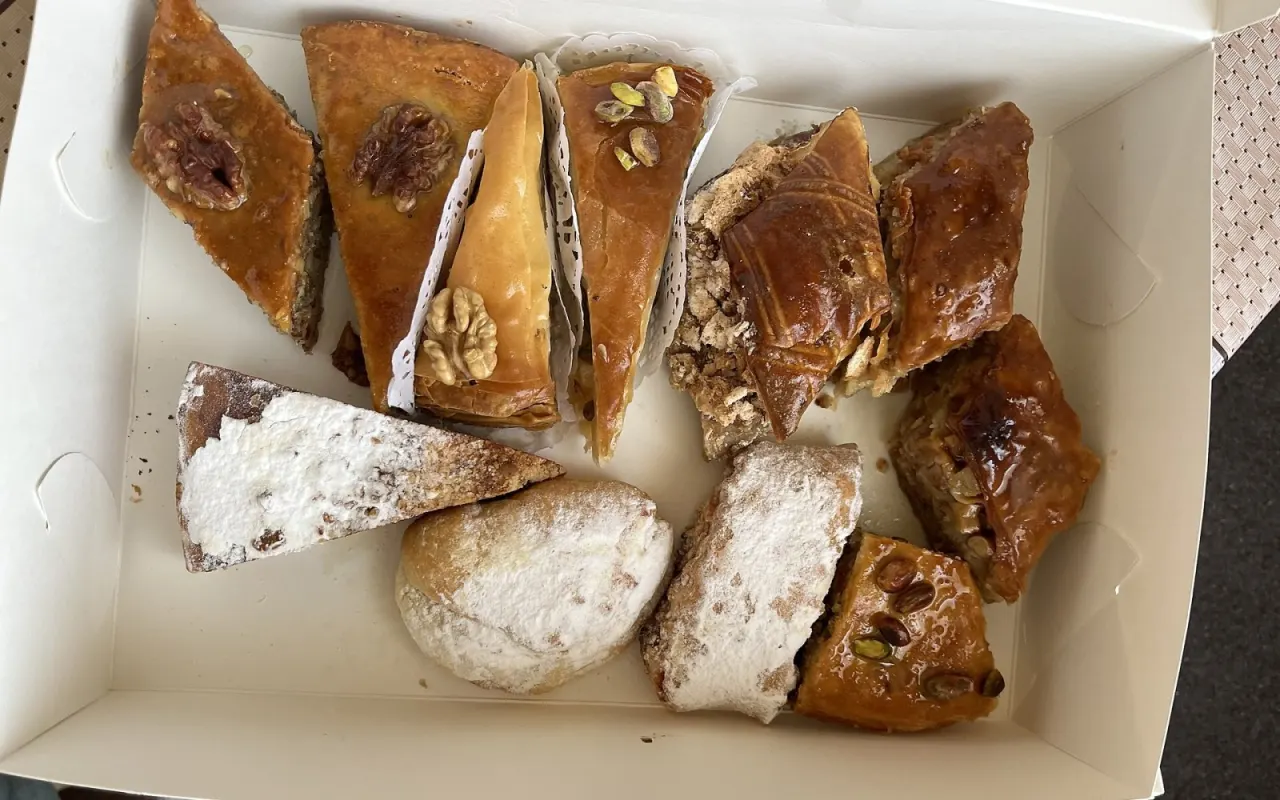
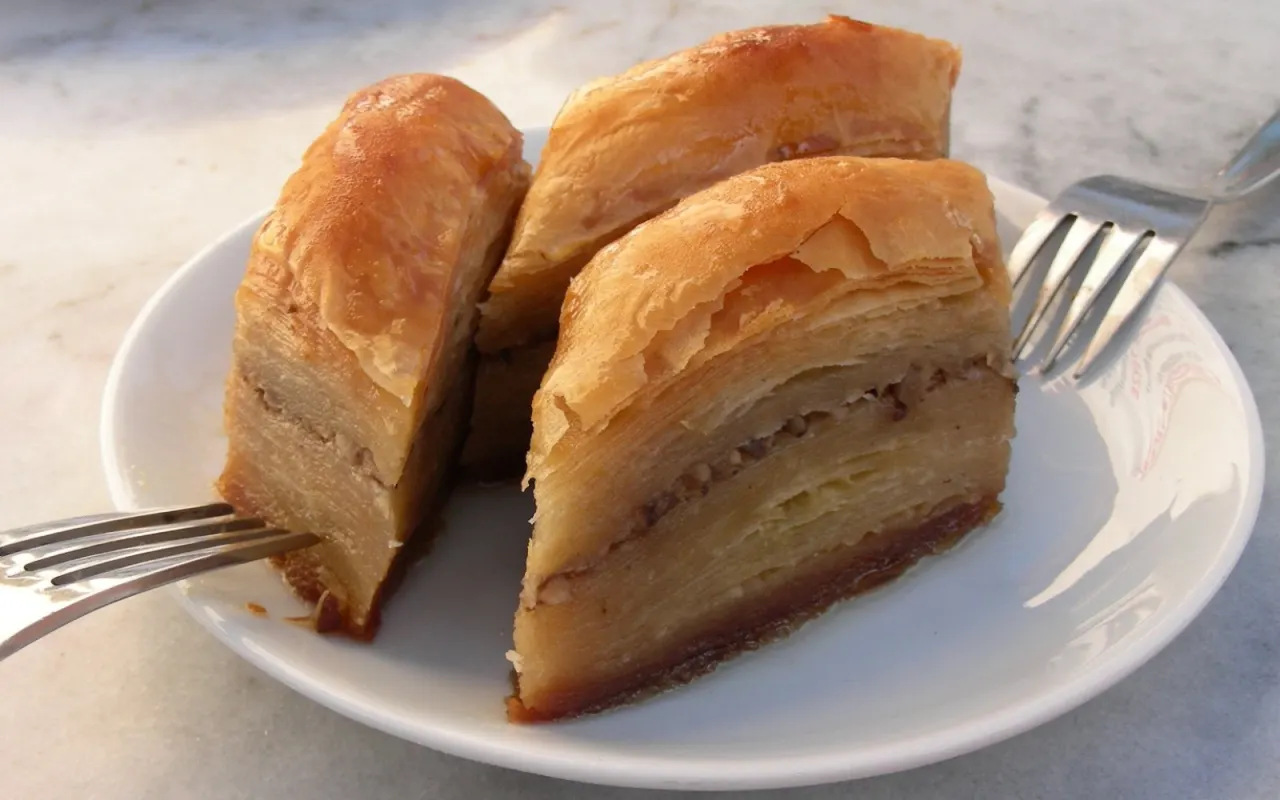
Baklava is one of the most labor-intensive creations of Turkish pastry making. In a good baklava, the sheets are thin enough to let light through, the layers stay separate, the bottom is crisp and the syrup soaks in without drowning the pastry. Master bakers spend years as apprentices learning to strike that balance. For our gallery feature, we watched production begin in the early hours of the morning at a baklava workshop that has been running for thirty years. We photographed every stage, from kneading the dough and rolling the sheets with starch to scattering the pistachios, pouring the hot butter and bringing the trays from the oven together with the syrup. At the end of the article, we also share a shortcut baklava recipe you can make at home.
Starch, rolling pin and thin pastry
At the workshop, the day begins at five in the morning with kneading the dough. Made with flour, eggs, water and a little salt, the dough is left to rest and then divided into small balls. The master baker begins rolling each ball out with his thin rolling pin on a counter dusted with starch. The starch keeps the sheets from sticking together and stops the dough from tearing as it's rolled. He explains that the dough's consistency changes with the season and the humidity, which is why he checks it by hand every morning. In winter he uses slightly warmer water.
The thinness of the pastry depends on a sensitivity of touch the master has built up over the years. A well-rolled sheet should be thin enough to read a newspaper through. To get there, he wraps the sheet around the rolling pin as he rolls and stretches it by tossing it in the air. In their first years, apprentices learn only this job and watch the master's every move. When you consider that a master in the workshop rolls out hundreds of sheets a day, it becomes clear how much physical stamina and concentration the work demands.
It isn't the hand that makes forty layers of baklava, but forty years of patience.
Ethan Brooks
Pistachios, butter and the oven
The rolled sheets are laid one by one in a tray brushed with butter. After about twenty bottom layers have been laid down, coarsely ground pistachios are scattered generously on top. Then around twenty more top layers are added, and the baklava is cut into diamonds with a sharp knife. The cutting must be done before baking; otherwise the layers get crushed. The quality of the pistachios also directly affects the flavor; the master says he prefers fresh, coarsely ground pistachios with a vivid green color, and that they should never be toasted.
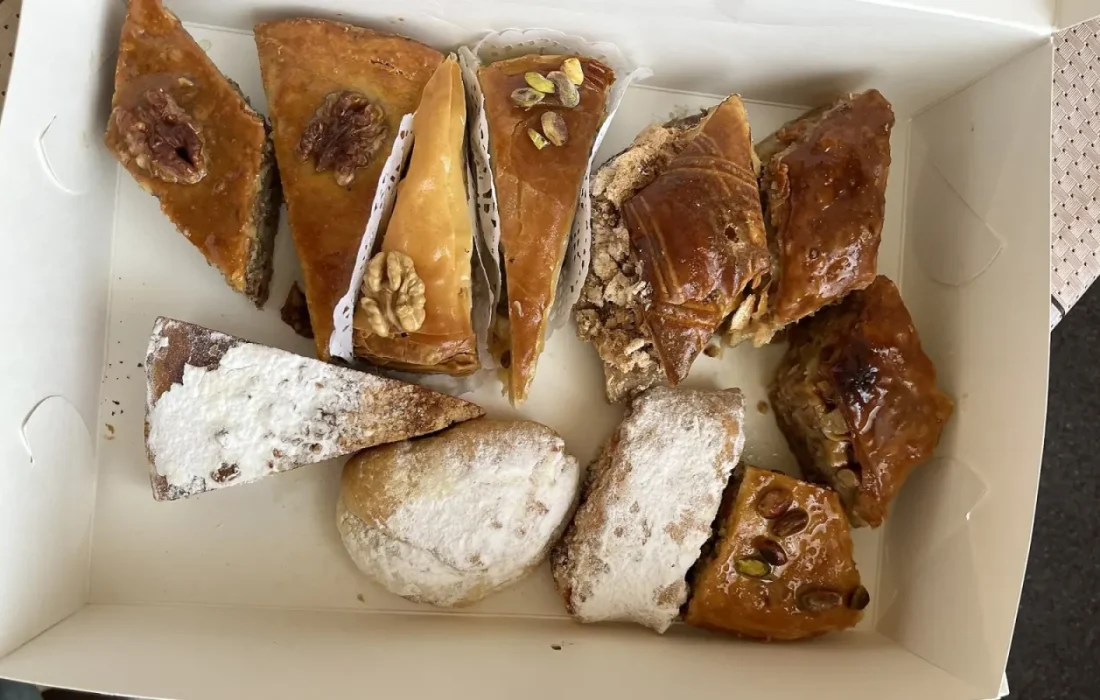
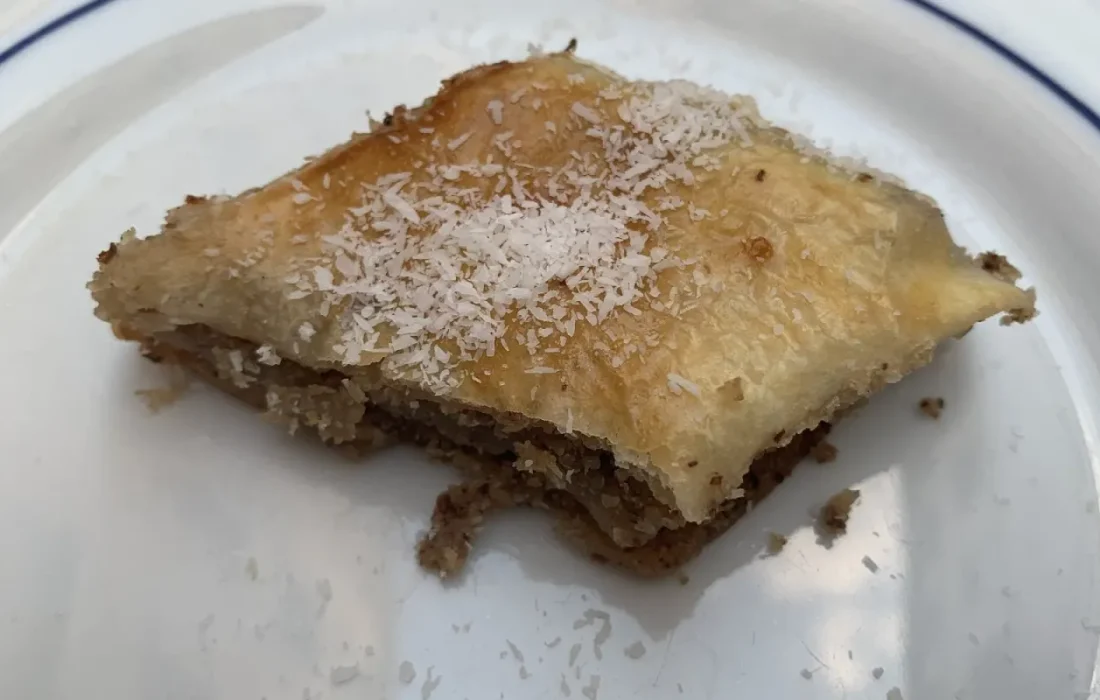
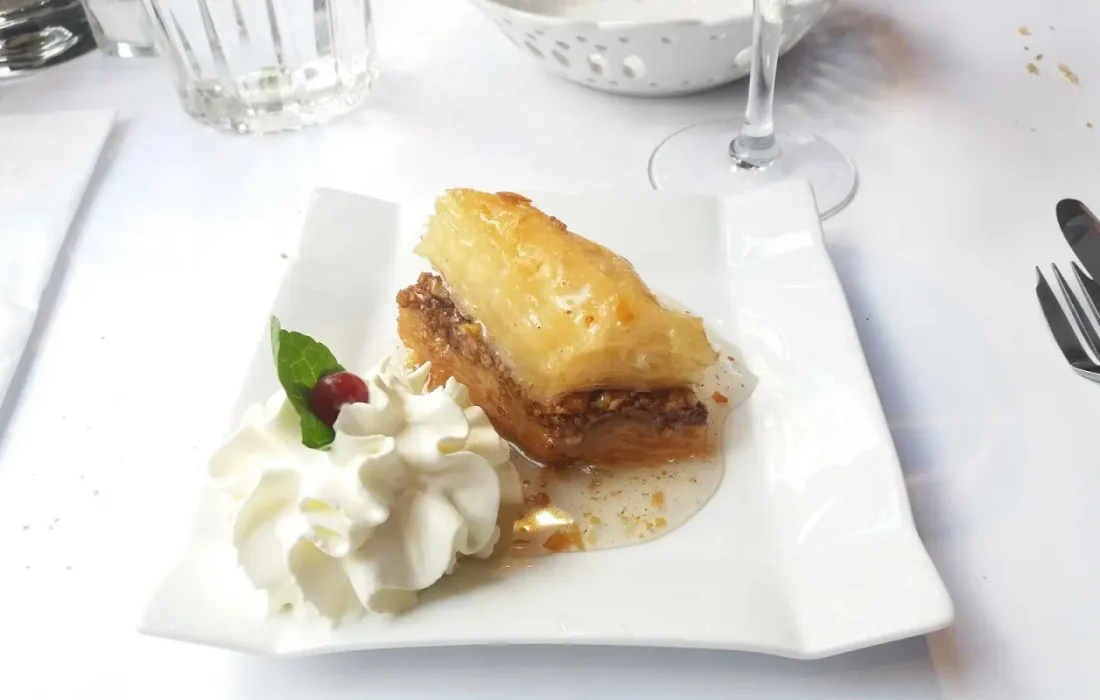
Sizzling hot butter is poured over the cut baklava. The temperature of the butter is critical for the layers to bake up crisp. The trays bake in a wood-fired or stone oven until golden. The master says he follows the oven's heat with his eyes and ears; the sizzle of the butter tells him when the baklava will be ready. Baking time varies with the size of the tray and the heat of the oven, but it usually takes forty to fifty minutes, during which the oven door stays shut.
The right syrup temperature
Baklava's most important secret is the temperature difference between the syrup and the pastry. Cooled syrup is poured over hot baklava fresh from the oven, or, the other way around, hot syrup over cooled baklava. If both are hot, the baklava turns doughy and loses its crunch. The syrup is made from sugar and water, with a few drops of lemon juice to keep it from crystallizing. Its consistency matters too: a syrup that's too thick weighs the baklava down, while one that's too thin makes the pastry soggy, so it should be somewhere in between.
| Topic | Desserts & Baking |
|---|---|
| Highlights | baklava, recipe, spices |
| Reading time | 7 minutes |
| Written by | Ethan Brooks |
Key takeaways
- Starch lets the sheets be rolled thin without sticking.
- Baklava should be cut before baking and covered with sizzling butter.
- Either the syrup or the pastry should be hot, and the other cool.
For anyone who wants to make baklava at home, store-bought phyllo dough is a good starting point. In the homemade baklava recipe at the end of our article, we explain the steps for a smaller, fifteen-layer tray using ready-made phyllo. The master baker says homemade baklava doesn't have to be perfect; what matters is getting the balance between syrup and pastry right. When using store-bought phyllo, don't forget to brush every layer with butter and keep the sheets covered with a damp cloth so they don't dry out; these two details make a big difference to the result.
What do you think about this post?
Leave a comment