





























































How to get poached quince just right: a step-by-step recipe with cloves and clotted cream
Every tip you need, step by step, for poached quince that glows with natural pectin from its seeds and turns a deep ruby red.
Table of contents
A staple of the November table, poached quince is a dessert that asks for patience despite its simple ingredients. A good one is deep ruby red, soft enough to cut with a fork yet firm enough to hold its shape, with a glossy, lightly thickened syrup. The secret lies in the seeds most people throw away: quince seeds release natural pectin into the syrup, setting both its texture and its color. In this article we walk you through every step in detail, from choosing the right fruit and how long to simmer it over low heat to balancing cloves and cinnamon and the ideal serving temperature. The recipe serves four and takes about an hour and a half.
Choosing the right quince
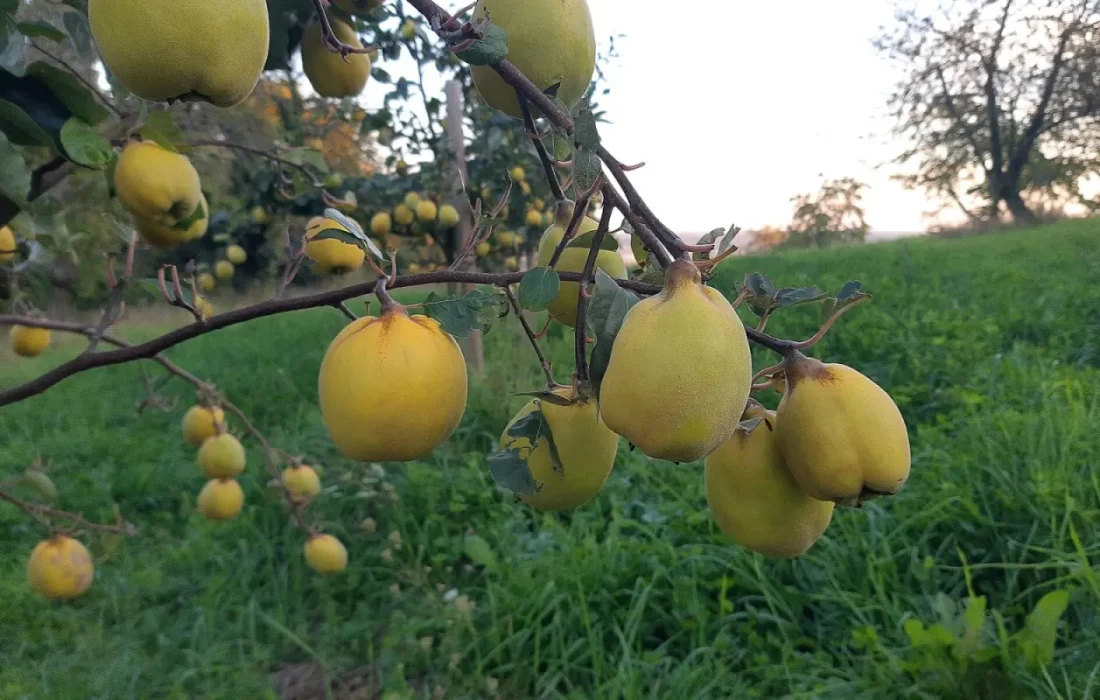
Good poached quince starts at the market. Choose quinces that are yellow, fragrant, heavy and free of soft spots; the fine fuzz on the skin is a sign of freshness and washes off easily. Very large quinces can fall apart on the outside while staying hard inside; medium-sized fruit gives a more even result. Two medium quinces are enough for a recipe that serves four. If possible, choose quinces of the same size so they all cook evenly in the same amount of time, and you won't end up with some falling apart in the pot while others stay firm.
After cutting the quinces in half, carefully scoop out the cores with a spoon, but whatever you do, don't throw away the seeds. As they cook, the seeds release natural pectin into the syrup, thickening it and helping the dessert take on its famous ruby color. Don't peel the quinces either; the skin helps the fruit keep its shape as it cooks and comes away easily when serving. To keep the cut quinces from browning, dip the cut sides in lemon water or leave them in a bowl of water until you're ready to cook.
It's patience, not sugar, that gives poached quince its color.
Ethan Brooks
Cooking, step by step
Arrange the quinces cut side up in a wide pot. Sprinkle 1 cup (200 g) of granulated sugar over them, tuck the seeds in between and add five or six cloves and a cinnamon stick. Pour in enough hot water to come halfway up the quinces. Cover the pot and bring it to a boil over medium heat, then turn the heat down. Take care not to add too much water: too much will thin the syrup and leave the quince pale, while too little can make it catch on the bottom.
Simmer over low heat for about an hour, spooning the syrup over the quinces now and then. The dessert is ready when the quinces are soft, their color has turned from pink to deep red and the syrup has thickened slightly. Cooking time can vary with the variety of quince; once the tip of a knife slides in easily, turn off the heat. Letting the quinces cool in the pot with their syrup deepens the color even further. Avoid turning the quinces too often while they cook; turning them carefully just once, after about half an hour, is enough to keep their shape intact.
Clotted cream, walnuts and serving
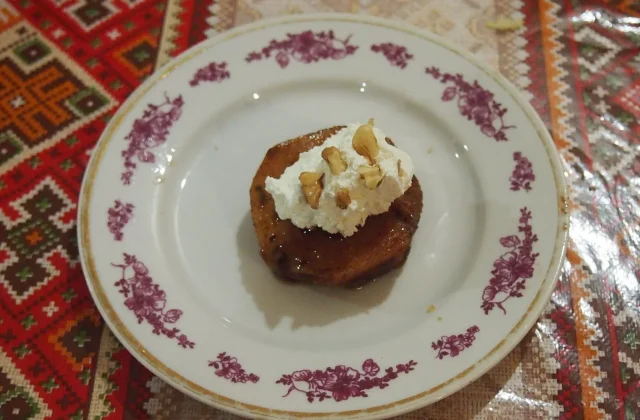
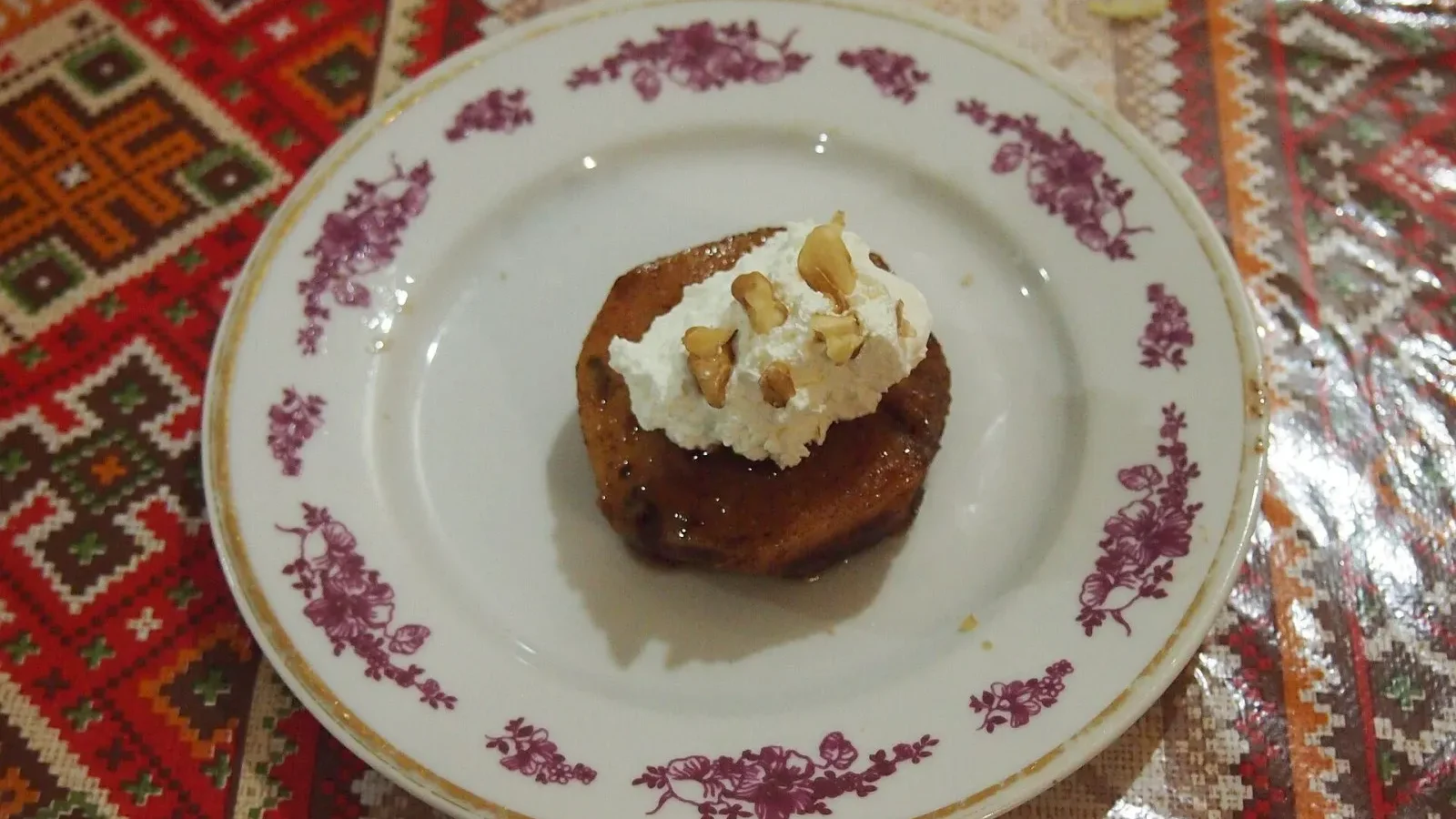
Poached quince is served warm or at room temperature. Place each quince half on a plate, put a spoonful of clotted cream in the hollow and sprinkle with crushed walnuts or pistachios. Straining the syrup left in the pot and drizzling a few spoonfuls over the top gives the plate a glossy finish. If you can't find clotted cream, serve it with strained Greek-style yogurt or a similar thick cream. Choosing flat, slightly shallow plates lets the syrup spread out and form a shiny halo around the dessert.
| Topic | Desserts & Baking |
|---|---|
| Highlights | quince, recipe, seasonal |
| Reading time | 6 minutes |
| Written by | Ethan Brooks |
Key takeaways
- Quince seeds give the syrup natural pectin; keep them for texture and color.
- About an hour over low heat brings out the ruby color.
- Serve warm or at room temperature, with clotted cream and walnuts.
The dessert keeps for two to three days in a covered container in the fridge. If you plan to serve it the next day, store it with its syrup and bring it to room temperature before serving. For a less sweet version, reduce the sugar by a third and cook a little longer. If you don't care for cloves, cinnamon alone also gives a lovely result. If you'd like a thicker syrup, remove the quinces from the pot, boil the remaining syrup for a few more minutes to reduce it and pour it over the dessert.
What do you think about this post?
2 Comments
Really useful piece, thank you for putting it together.
I had never thought about this side of it. Looking forward to a follow-up.