


















































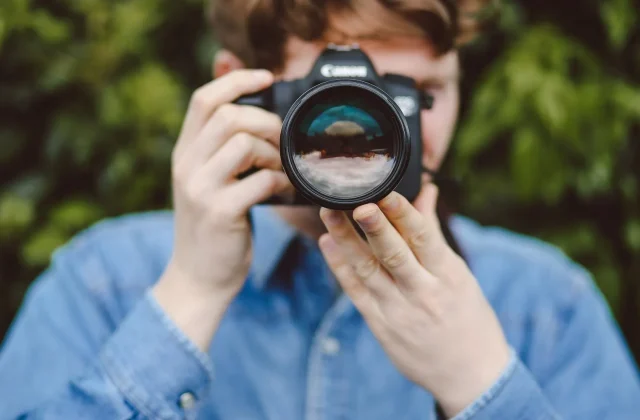
On a walk with master photographer Alan Hughes, who has photographed every corner of Anatolia over a career spanning more than fifty years, I listened to his philosophy of photography.
Master photographer Alan Hughes: “Good photos are taken with the soles of your shoes”
On a walk with master photographer Alan Hughes, who has photographed every corner of Anatolia over a career spanning more than fifty years, I listened to his philosophy of photography.
One morning I went for a walk through the streets of the old bazaar with Alan Hughes, who has taken countless frames in Anatolia's villages and towns over a career of more than fifty years. Though well past eighty, his steps were still quick and his eyes still curious. Throughout the walk he told me that a photographer's greatest talent is not looking but seeing. The master, who says he found nearly all of his frames on foot, shared his favorite piece of advice.
In this article
- Fifty years of experience
- Looking by waiting
- Advice for young photographers
Fifty years of experience
For more than fifty years, Alan Hughes has photographed the villages, fairs and markets of Anatolia. He got his first camera at twenty, a film camera inherited from his mentor. In those days photography was a luxury pursuit; he would make a single roll last a month. It was through this scarcity that he learned the value of every frame. Today he still works with the same care and sees every frame as a small victory.
Throughout our walk, we moved slowly through the streets of the old bazaar. The master held a small, battered camera, and at every step he showed me something: a shadow above a door, a window reflected in a tea glass, a shopkeeper's gaze. An eye honed over fifty years found a photo on every corner. This power of observation came less from years of habit than from a gaze fed by constant curiosity.

Good photos aren't taken with a camera, but with the soles of your shoes.
Emily Carter
Looking by waiting
The master sees photography as synonymous with waiting. He told me he sometimes stands on a street corner for an hour to find a single frame. He waits for the light to reach the right angle, for a cyclist to enter the frame or a child to step out of a doorway. Instead of getting bored while waiting, he said, he listens to the street breathe. To him, a good photographer is someone who joins the rhythm of the street before taking the shot.
He also explained the difference between looking and seeing. Looking is the eye wandering over something; seeing is waiting for that thing to speak to you. For that, he believes, you have to say goodbye to phones, screens and hurried movements. During the walk he greeted everyone who passed us, and most of them recognized him and greeted him back. As I listened, I noticed my own haste and my habit of constantly checking a screen, and felt a little embarrassed.
Advice for young photographers
His first piece of advice for young photographers is to keep looking at photographs. Looking at good photos is the foundation of training your eye; study the masters' books, visit exhibitions and approach photos by asking why they look good. His second piece of advice is to walk. He says most frames are found not in a car or at home, but on the soles of your shoes. To him, growth comes above all from lovingly studying the work of others and discovering the world on foot.
| Topic | Stories |
|---|---|
| Highlights | street photography, film photography, portrait |
| Reading time | 4 minutes |
| Written by | Emily Carter |
Key takeaways
- The master explains that finding a photo is possible through patient waiting and walking.
- The difference between looking and seeing comes down to not rushing.
- His advice to the young: look at lots of photos, walk a lot and respect people.
The third piece of advice is respect for people. When taking photos, you need to see the person in front of you not as an object but as a story. At the end of the walk, he bought me a tea and pulled an old postcard-sized photo from his pocket. It was a frame he had taken fifty years earlier; the bazaar was still in the same place, but the eye that photographed it had grown deeper every year.
What do you think about this post?
Leave a comment