



















Table of contents
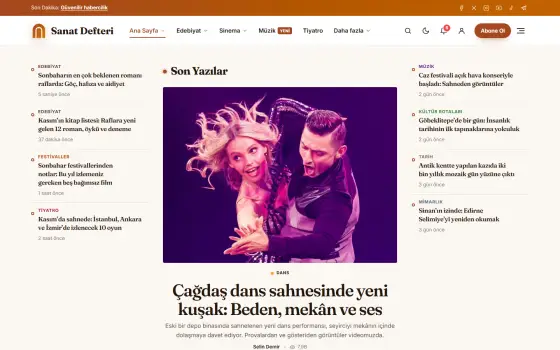
With its slow rhythm and proud bearing, the zeybek is one of the best-known folk dances of the Aegean. A young dance company has created a new show that brings this traditional dance together with the movement vocabulary of contemporary dance. The company's founder and choreographer, Marcus Hayes, explained how they reinterpreted for the stage the figures they had collected from elderly dancers in the villages. The show will tour several cities in the coming months.
The spirit of the zeybek
The spirit of the zeybek lies in the dance's slow progression, its wide-open arms and its bearing. The company's choreographer, Marcus Hayes, explains that the dance is less a display than a stance. When a zeybek dancer steps forward, he doesn't try to prove himself; he takes his place calmly, with respect and dignity. That calm makes the zeybek a dance of attitude rather than of challenge.
In bringing this spirit to the contemporary stage, Hayes takes care not to stray from the roots of the movements. The figures he collected from elderly dancers in villages and small towns form the cornerstones of the company's choreographic language. Some of these figures appear in no written source and survive only by being passed from master to apprentice. Hayes says he devoted the company's early years to recording these figures, listening to the elderly dancers' movements and the stories they told. Those recordings now serve as the company's archive.
When you reinterpret the zeybek, the first rule is to respect its weight.
Ethan Brooks
Renewing tradition without breaking it
Renewing the tradition without breaking it is the balance the company cares about most. The dancers combine zeybek figures with the floor work and body use of contemporary dance. A scene that begins in the traditional stance, for example, gradually turns into a movement that sinks to the floor and then rises again. These transitions bring a new fluidity without disturbing the weight of the traditional dance, inviting audiences into a world that is both familiar and new.
Hayes recalls that an elderly zeybek master came to watch the first rehearsals and that his comments became a benchmark for the company. The master told them not to fear change too much but to respect the dance's weight. The music combines regional folk instruments with light electronic touches, a hybrid sound that creates a new atmosphere without disturbing the dance's rhythm.
The tour and new projects
The company will tour the show to cities across the country in the coming months, with support from local folk dance associations and cultural centers. In each city, an open workshop will be held before the performance where audiences can try zeybek figures together. The workshop will be open to people who have never danced before, and after a short session participants will learn a simple part of the movements seen on stage. That way, audiences will be able to feel the weight of the dance in their own bodies.
| Topic | Dance |
|---|---|
| Highlights | dance, festival, interview |
| Reading time | 6 minutes |
| Written by | Ethan Brooks |
Key takeaways
- With its dignified bearing and slow rhythm, the zeybek comes to the contemporary stage.
- The choreographer combines figures collected from elderly dancers with a new movement language.
- On tour, an open zeybek workshop will be held in each city before the show.
Among Hayes's new projects is a work that brings folk dances from different regions together on the same stage. To build a bridge between generations, the company aims to bring young dancers and elderly masters into the same workshop. You can follow the tour schedule on the company's channels; ticket information will be shared through local cultural centers in each city.
What do you think about this post?

Leave a comment