






















































Table of contents
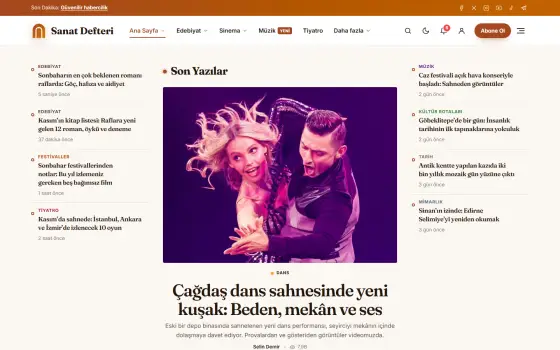
In recent years contemporary dance has moved beyond traditional stages, meeting audiences in warehouses, galleries and public spaces. Choreographer Alice Turner's new piece is staged in an old warehouse, with the audience free to move among the dancers. In the performance, which features six dancers, live electronic music and shifting lighting constantly transform the space. In our video, you can watch footage from rehearsals and opening night, along with notes on the choreographer's approach.
A performance without a stage
The performance begins on the wide ground floor of an old grain warehouse on the edge of the city. As they enter, audience members realize there is no stage and no seating; six dancers move slowly through the crowd, dividing up the space. Spectators sometimes stand in front of the dancers, sometimes step back behind a column, and each experiences the performance from a different angle.
This setup blurs the line between the watcher and the watched. The dancers meet the audience's eyes, sometimes passing so close that you can hear them breathe. Many spectators say having to choose their own position by walking through the middle of the performance felt unsettling at first, then liberating. The silence that falls at the end, before any applause, is seen as a sign of how intense the experience is.
You don't watch the dance; you move through it.
Ethan Brooks
The choreographer's approach
Choreographer Alice Turner describes her approach as a language that begins with the space. First, the team visited the warehouse for weeks, recording the movements suggested by its walls, its floor and the marks left by old machinery. Working from these notes, the dancers developed figures specific to the site; in other words, the choreography was written not for a stage but into the building's memory. Turner says the method offers dancers a new way of reading a space.
According to Turner, the key principle in rehearsals was for the dancers to see their bodies not as tools but as extensions of the space. That is why the movements are often slow and controlled. Halfway through, a dancer leaning against a wall advances a single movement in tiny increments over several long minutes, creating one of the most intense silences of the evening.
A world built from sound and light
The sound design is a blend of live electronic music and real sounds collected in the warehouse. The creak of an iron gate, the chain of an old crane and footsteps echoing off the floor are turned into rhythm to accompany the performance. The musician processes the recordings in real time and feeds the sounds back into the space. Thanks to the different combinations of sound, each performance differs slightly from the last.
| Topic | Dance |
|---|---|
| Highlights | dance, contemporary art, theater |
| Reading time | 5 minutes |
| Written by | Ethan Brooks |
Key takeaways
- The performance takes place in an old warehouse where the audience moves among the dancers.
- The choreography grew out of notes taken from the building's walls and floor.
- Live electronic music and portable lights constantly transform the space.
The lighting is built from portable lamps that move with the crowd. The dancers carry the lamps themselves, lighting one area before moving on to another. As a result, the warehouse feels like a narrow corridor one moment and a vast hangar the next. In our video, you can see how this transformation took shape from rehearsal to premiere.
What do you think about this post?
2 Comments
Really useful piece, thank you for putting it together.
I had never thought about this side of it. Looking forward to a follow-up.