





















































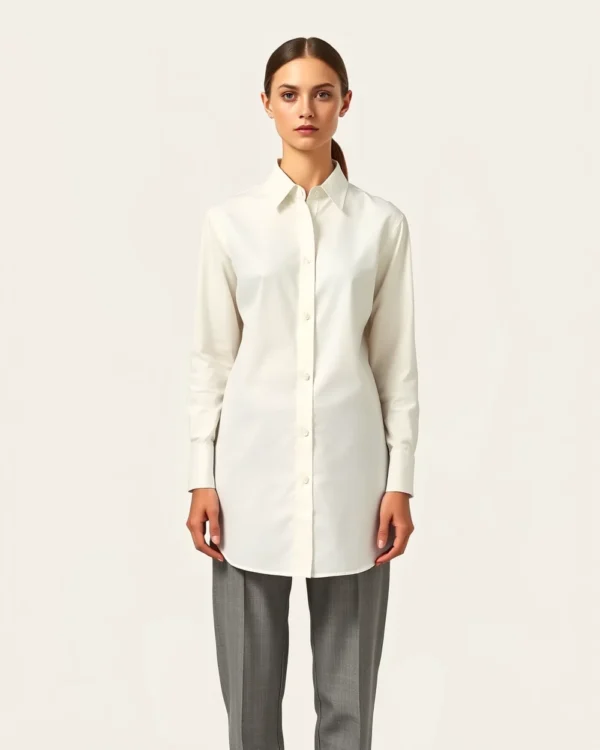

Sustainable fashion and choosing the right fabrics
Sustainability is more than a word on a label. We explain natural and synthetic fibers, how to judge fabric quality and the principles of building a long-lasting wardrobe.
Most of us are surprised when we hear how much water goes into making a single T-shirt, or how many garments are thrown away every year. Sustainable fashion covers the most effective steps we can take as individuals to change that picture. At the heart of these steps is choosing the right fabric and wearing what we buy for many years. Drawing on our sourcing team's experience, we share how to understand fabrics and shop more consciously.
In this article
- Less but better: the first rule of sustainability
- Natural, semi-synthetic and synthetic fibers
- Learning to read labels and fabrics
Less but better: the first rule of sustainability
The first and most effective rule of sustainable fashion is to buy less but better. Most of a garment's environmental impact occurs during production: growing, spinning, weaving, dyeing and sewing the fiber. The most direct way to reduce that impact is to use every piece we buy for longer. Research shows that extending a garment's life by just nine months significantly reduces its carbon and water footprint. That's why the journey toward sustainability begins with taking better care of what we already own, before buying something new.
So when shopping, we suggest asking yourself: will I wear this piece at least thirty times? If the answer is no, perhaps we shouldn't buy it. At Maison Lale, we produce our collections in limited numbers and, instead of chasing new trends every season, work on timeless patterns that can be worn for years. We offer free care support for our leather goods and make our shoes so they can be resoled, because a product that can be repaired is a product that lives long. We also reuse cutting-room offcuts in linings, fabric bags and small accessories, keeping the waste that leaves our studio to a minimum.
The most sustainable garment is the one you wear for years.
Ethan Brooks
Natural, semi-synthetic and synthetic fibers
Fabrics fall into three basic groups. Natural fibers come from plants or animals: cotton, linen, wool, silk and cashmere are the main ones. These fibers are biodegradable and, with the right care, very long-lasting. Linen needs far less water to grow than cotton and requires almost no pesticides. Organic cotton is grown without chemical fertilizers or pesticides. Wool refreshes itself with a little air, so it needs washing less often. With these qualities, natural fibers form the foundation of the longest-lasting wardrobe, given the right care.
Semi-synthetic fibers, such as viscose, come from natural sources but are produced through chemical processing. Viscose is made from wood pulp and is a fluid fabric that keeps the skin cool, though the environmental impact of its production varies greatly between suppliers. Synthetic fibers such as polyester and polyamide are made from petroleum. Their durability and crease resistance are advantages, but they shed microplastics in the wash. We use synthetic fibers only where the function demands it, such as in a pleated skirt, and only in high-quality versions. When washing pieces with synthetic content, using a laundry bag with a microfiber filter reduces the amount of microplastics released into the water.
Learning to read labels and fabrics
The first step to shopping consciously is reading the label. The fabric composition, where it was made and the care instructions tell you a lot about how durable a product will be. That's why we share this information clearly on our product pages. But a label doesn't tell you everything; you also need to judge the fabric itself. Hold it up to the light: a tightly woven fabric lets little light through. Squeeze it gently in your hand: a quality fabric quickly recovers from creasing when you let go. With knitwear, stretch the fabric slightly and release it; if it springs back into shape right away, the yarn quality is good.
| Topic | Care & Fabrics |
|---|---|
| Highlights | sustainable fashion, linen, silk |
| Reading time | 7 minutes |
| Written by | Ethan Brooks |
Key takeaways
- Ask yourself whether you'll wear each piece at least thirty times.
- Choose long-lasting natural fibers like linen, organic cotton and wool.
- Read the fabric composition, origin and care instructions on the label.
Look at the seams, too. Neat, dense stitching that isn't pulled tight is a sign of good craftsmanship. Seams with raw edges on the inside and loose threads hanging off suggest the piece may wear out quickly. Securely sewn buttons, a zip that glides easily and a lining that sits smoothly are also important clues. Once these small checks become a habit, choosing pieces you'll wear for years becomes much easier, and your closet will fill with fewer but more valuable pieces. Remember, a single well-chosen piece is worth far more than five that wear out in no time.

Leave a comment