






















































Table of contents
People who spend most of the day at a desk often end it with a stiff neck, sore shoulders and a tight lower back. Physical therapists say sitting in the same position for long periods shortens the muscles and leads to poor posture. Fortunately, a few minutes of stretching every hour goes a long way toward preventing these problems. In this article, we share a ten-minute stretching routine you can do without leaving your chair or right next to your desk.
Neck and shoulders
The routine starts with the neck and shoulders, because that's where most of the strain from desk work builds up. First, slowly lower your chin toward your chest and hold for five breaths. Then bring your ear toward your shoulder and hold for twenty seconds on each side. Lifting your shoulders up to your ears and letting them drop all at once is the easiest way to release built-up tension. Don't force the moves; stay within a pain-free range.
The second stage includes shoulder circles and a chest opener. Clasp your hands behind you and gently open your chest forward while drawing your shoulder blades together. This position can help counter shoulders that hunch forward toward the screen. Repeat each move two or three times. If neck pain spreads into your arm or causes numbness, stop the exercise and see a health professional.
Your best posture is your next posture, so move often.
Mark Ellison
Back and lower back
For the back and lower back, a seated twist in your chair works wonders. Plant your feet on the floor, place your right hand on the outside of your left knee, gently turn your torso to the left and extend your gaze over your shoulder. After ten breaths, switch sides. Then rest your hands on the desk and push your hips back to lengthen your back; this move stretches the spine and the area around the shoulders.
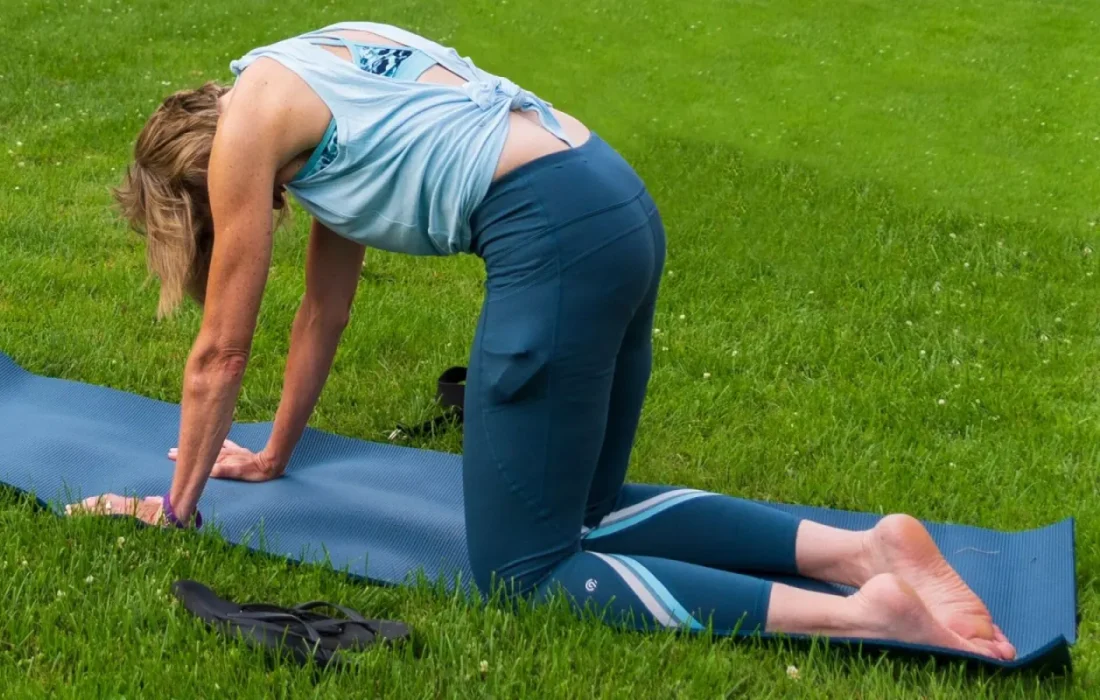
If you feel strain in your lower back, a seated version of cat-cow is a good option. With your hands on your knees, round your back as you exhale and open your chest forward as you inhale. Eight to ten reps is usually enough. You don't have to do the whole routine at once; two-minute mini breaks spread throughout the day can do more good than a single long session.
Hips and legs
Sitting for long periods shortens the hips and hamstrings, which can be linked to lower back pain. Stand up, place one foot on your chair or a low surface, keep your torso upright as you lean forward and feel a gentle stretch along the back of your leg. Hold for thirty seconds on each side. If your balance isn't great, hold on to the desk or a wall.
| Topic | Fitness |
|---|---|
| Highlights | stretching, stress, movement |
| Reading time | 5 minutes |
| Written by | Mark Ellison |
Key takeaways
- A few minutes of mini breaks every hour can be more effective than one long session.
- Stretches should be done with the breath, never pushing to the point of pain.
- Pain that spreads into the arm, or numbness, calls for a health professional.
To stretch your hips, simply place one ankle on the opposite knee while seated and lean your torso slightly forward. Then stand up and slowly squat down and up ten times to switch your muscles back on. Setting an hourly alarm to remind you to stand up is a practical way to keep the routine going. If you feel a sharp pain during any move, stop and get advice from a physical therapist.
What do you think about this post?
2 Comments
Really useful piece, thank you for putting it together.
I had never thought about this side of it. Looking forward to a follow-up.