



























































Race engineer Daniel Hart: “Every second gained on track starts at the factory”
Engineer Daniel Hart, a veteran of international racing teams, talks about the meticulous work and team spirit behind success in motorsport.
Engineer Daniel Hart, a veteran of international racing teams, talks about the meticulous work and team spirit behind success in motorsport.
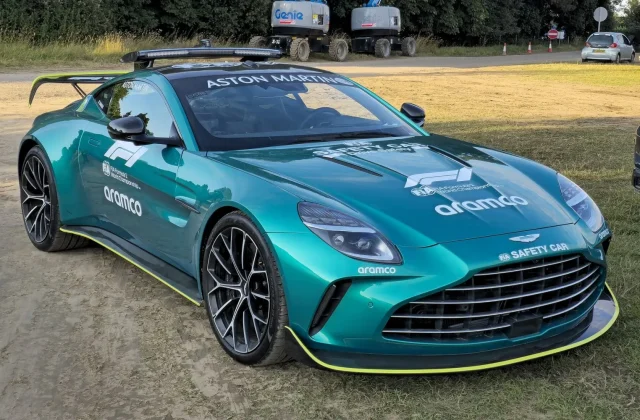
Daniel Hart, who has worked as a performance engineer for European racing teams for more than 15 years, says the success you see in motorsport rests on months of work by hundreds of people. According to Hart, every hundredth of a second gained over a lap starts with wind tunnel tests, simulator sessions and endless data analysis back at the factory. The standout line from our interview sums up that philosophy perfectly. Hart also urges young engineers never to lose their curiosity or their commitment to teamwork.
In this article
- From factory to track
- The role of data analysis
- Advice for young engineers
From factory to track
We opened the interview with Hart's idea that a race actually starts on Monday morning. Most of the decisions made on track at the weekend are the product of calculations done at the factory weeks earlier. Wind tunnel data, material tests and the parts manufacturing process determine how ready the car will be on race day. That perspective helps us understand the countless hours of work behind a single lap that viewers see.
Hart compares the division of labor within the team to an orchestra. Aerodynamicists, power unit engineers, materials specialists and the strategy team may seem to work independently, but the car's performance depends on all of them working in harmony. Even a 20-gram difference in a part's weight can show up in lap times, and everyone knows it. That's why trust within the team is seen as the most valuable resource.

Every second gained on track starts at the factory.
Jake Morales
The role of data analysis
For Hart, data analysis is the language of modern racing. Hundreds of sensors on a race car collect thousands of measurements every second. Engineers compare this data with the driver's feedback to make setup decisions. If what the numbers say contradicts what the driver feels, he says you should listen to the driver first, then go back to the numbers to find out why. That balance is considered one of the most important qualities of an experienced engineer.
Simulator work is another key part of the data flow. Hart explains that before a race weekend, the same lap is driven hundreds of times in the simulator, where setup suggestions are tested. But he stresses that the simulator is no substitute for real life, and variables like track temperature and wind can still spring surprises. Even so, the simulator remains an indispensable tool for improving efficiency.
Advice for young engineers
Hart's first piece of advice for young engineers is to learn the fundamentals well. Rather than memorizing core subjects like fluid mechanics, materials science and control systems, he wants them to ask why things work the way they do. Joining student teams, building a small-scale race car and not being afraid of making mistakes are also the first steps on that path.
| Topic | Motorsport |
|---|---|
| Highlights | Formula 1, rally, motorsport |
| Reading time | 5 minutes |
| Written by | Jake Morales |
Key takeaways
- Most of a car's race performance takes shape in wind tunnel and test work at the factory.
- Data from hundreds of sensors is assessed together with driver feedback.
- Young engineers are advised to master the fundamentals and communicate well within the team.
His second piece of advice is about communication. A good engineer is someone who can explain the solution they've found to the driver, the mechanics and the strategy team, each in their own terms. Hart stresses that success in racing teams depends not on a single genius but on a team that listens to one another. He closes the interview with a reminder never to lose your curiosity and to take a lesson from every race. That approach is seen as the foundation of a long career in a demanding industry.
What do you think about this post?



2 Comments
Really useful piece, thank you for putting it together.
I had never thought about this side of it. Looking forward to a follow-up.