































































A day at a ceramics studio: why getting to know clay feels so good
Sitting at a potter's wheel for the first time, our editor shares her experience of a four-hour beginners' workshop on video. Clay, patience and plenty of smiles.
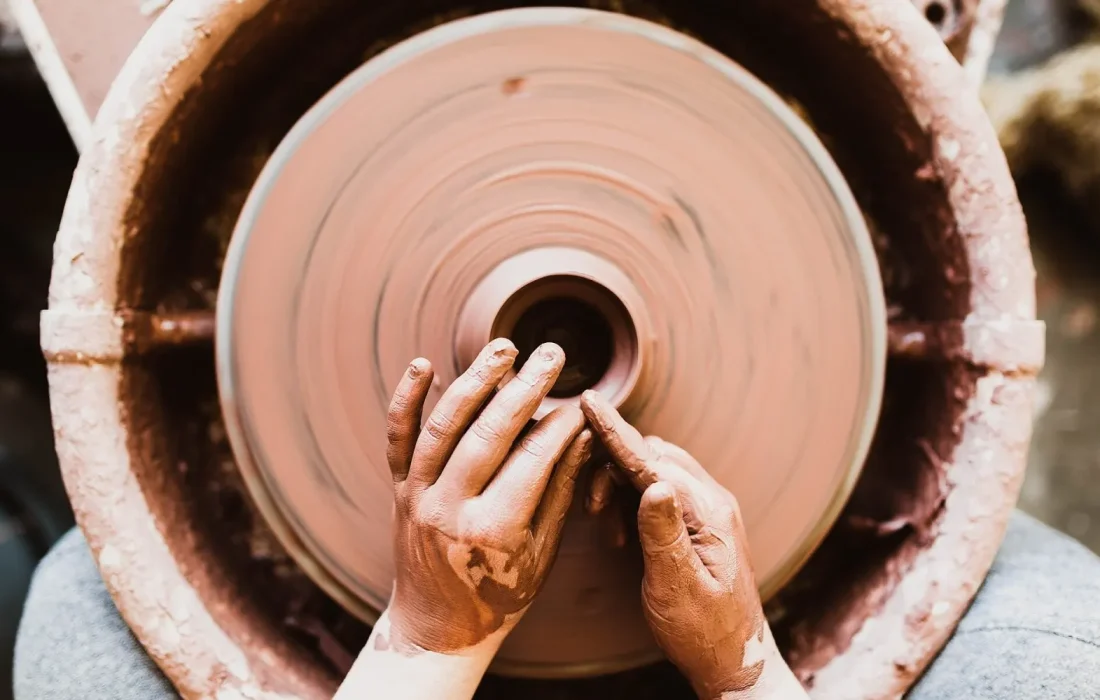
Table of contents
In recent years, ceramics studios have become a favorite destination for people who want to step away from their screens and make something with their hands. Our editor Sasha Tanner, who had never touched clay before, joined a four-hour beginners' workshop. Studio owner and ceramic artist Henry Oakes says first attempts almost always come out lopsided, and that the real joy lies in those imperfections. In our video, you can follow the whole process from the first minutes at the potter's wheel to the first bowl ready for the kiln.
The first minutes at the wheel
The first thing we noticed when we walked into the studio was its quiet, peaceful atmosphere. Bowls, cups and plates left to dry lined the shelves. When Sasha Tanner sat down at the wheel, she found the feel of the clay on her hands both cooling and calming. Henry Oakes explained that the first step is to knead the clay thoroughly and work out the air inside.
As expected, the first attempts came out lopsided. Tanner's first bowl grew leaning from one side to the other and then collapsed. Oakes said this is completely normal and that the goal of the first days is to get a feel for how the clay behaves. In the video you can watch the funny, candid footage of these first moments. Tanner didn't let the defeat bother her and, smiling, picked up a fresh lump of clay.

Clay takes shape for those who listen, not those who rush.
Sophie Laurent
The test called centering
Centering is the hardest and most important stage at the potter's wheel. The clay has to sit right in the middle of the wheel; otherwise the piece wobbles as it spins and loses its shape. Oakes advised keeping the hands steady and the elbows close to the body. Tanner said she experienced this stage like a test and tried again and again.
When the clay was finally centered, the sound and feel of the soft mass gliding round on the wheel brought an indescribable satisfaction. According to Oakes, centering builds patience and the ability to listen. Rush it and the clay resists; slow down and it becomes yielding. Tanner said the experience was a good lesson for everyday hurry too, and that rushing doesn't always pay off.
Before it goes in the kiln
Before going into the kiln, the pieces are left to dry. Oakes showed how to smooth the rims of the bowls, trim and shape the base and, if you like, sign your work. Once dry, the pieces first go through a low-temperature bisque firing, then are glazed and fired a second time. The process can take a few weeks. Controlling how fast the clay dries is important at this stage too; pieces that dry too quickly can crack, so the studio staff advise patience.
| Topic | Culture & Arts |
|---|---|
| Highlights | weekend, inspiration, minimalism |
| Reading time | 5 minutes |
| Written by | Sophie Laurent |
Key takeaways
- Lopsided first attempts are an expected and enjoyable part of the experience.
- Centering is the hardest stage at the wheel and takes patience.
- Pieces are dried and fired in two stages before they're ready to collect.
Tanner's bowl was ready to collect from the studio a few weeks later. Although it's lopsided and a little asymmetrical, it holds a special place as her first piece. For a workshop experience, we recommend wearing comfortable clothes, keeping your nails short and leaving plenty of time. Working with clay, after days spent in front of a screen, reminds you of the joy of creating something with your own hands.
What do you think about this post?



Leave a comment