





























A tour of Republican-era architecture in Ankara: Early modern buildings from Ulus to Kızılay
The banks, schools and public buildings built in the capital's early years express the architectural ideals of the young republic. Watch our walk, starting in Ulus, in the video.

Table of contents
Ankara's streets tell the story of how a steppe town became a modern capital after the founding of the republic. Around Ulus, the first banks and public buildings carry the traces of the national architectural style; heading toward Kızılay, simpler, modernist lines emerge. On a walk guided by architect Ellen Grant, we heard the stories of the buildings that witnessed the city's first years. Our video ends with the monumental architecture of Anıtkabir.
First stop: Ulus Square
Our walk began in front of a bank building in Ulus Square. Our guide, Ellen Grant, explained that the building's stone facade and tall windows reflect the period's desire to project the image of a serious, trustworthy institution. The other buildings on the square share a similarly symmetrical, monumental layout. The stonework on the facades and the wide steps at the entrances further emphasize their gravitas.
The ensemble of buildings in Ulus is a product of the young republic's effort to express itself. According to Grant, building materials and skilled builders were hard to come by in Ankara in those years, so local stone and traditional building elements were often used. On our way out of the square, we also stopped in front of the plain facade of the first parliament building. Its small scale recalls the capital's modest means in its early years.
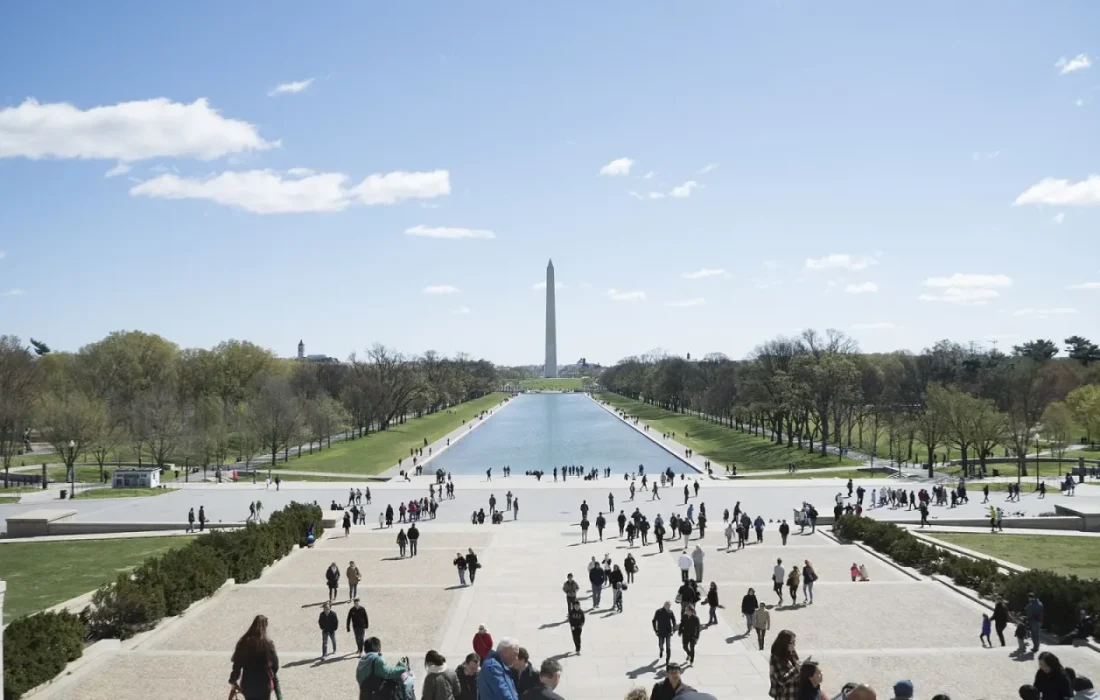
Ankara's buildings tell how a new country imagined itself.
Mark Ellison
From national style to modernism
The national architectural style combines the arches, eaves and facade layouts of Ottoman architecture with new building programs. Grant explains that the style was chosen for public buildings as a language that nods to tradition. Tile panels, pointed arches and broad eaves are among the hallmarks of the period, and they can still be read in the banks and schools around Ulus. Grant asked us to pay attention to the buildings' measured symmetry and strong entrances.
Walking toward Kızılay, the lines of the buildings become noticeably simpler. Ornament fades, facades turn geometric and windows are arranged in horizontal bands. This modernist approach spread partly through the influence of foreign architects. Saying we could see the transition between the two styles within a single street, Grant stopped us at an intersection. Reading the facades on either side of the street together is like watching twenty years of architectural change.
Journey's end at Anıtkabir
The final stretch of the walk leads to Anıtkabir. Its symmetrical layout, long stone processional way and vast square instill a solemn, respectful mood in visitors. Grant notes that the design was chosen through a competition and is an important synthesis of the period's architecture. The colonnaded entrance of the mausoleum and the lion statues lining the processional way complete the building's ceremonial language. Visitors usually walk this path in silence.
| Topic | Architecture |
|---|---|
| Highlights | architecture, museum, photography |
| Reading time | 7 minutes |
| Written by | Mark Ellison |
Key takeaways
- The walk begins with the early Republican-era bank and public buildings on Ulus Square.
- Toward Kızılay, the national architectural style gives way to plain modernist facades.
- The route ends at the monumental grounds of Anıtkabir and takes about three hours.
In our video, you can watch footage from the walk along with Grant's short commentary. A tip for visitors: Most of the buildings can be seen from outside, but going inside may require permission in advance. Doing the walk in the morning is better for both the weather and the light. The whole route takes about three hours, and there are a few quiet cafés along the way if you want a break.
What do you think about this post?
Leave a comment