






























































Haircuts for your face shape: tips for choosing the right style
The right cut balances your features and works in harmony with your hair's natural texture.
One of the questions our guests ask most often is which cut will suit them. The answer lies not just in current trends but in your face shape, your hair's natural texture and your daily routine. A cut that suits your face shape balances your features and highlights your best ones. Still, this is a starting point, not a rulebook. In this article we share how to work out your face shape and our general recommendations for each one.
In this article
- How to find your face shape
- Recommendations by face shape
- Hair texture and daily routine
How to find your face shape
To work out your face shape, pull your hair back and look at the overall outline of your face in the mirror. Compare the width of your forehead, cheekbones and jawline, and compare the length of your face with its width. Oval, round, square, heart and long are the most common face shapes.
Most faces combine features of more than one shape. So rather than forcing your face into one category, it's more useful to identify the features you'd like to balance, such as softening a wide jawline or making a long face look more balanced.
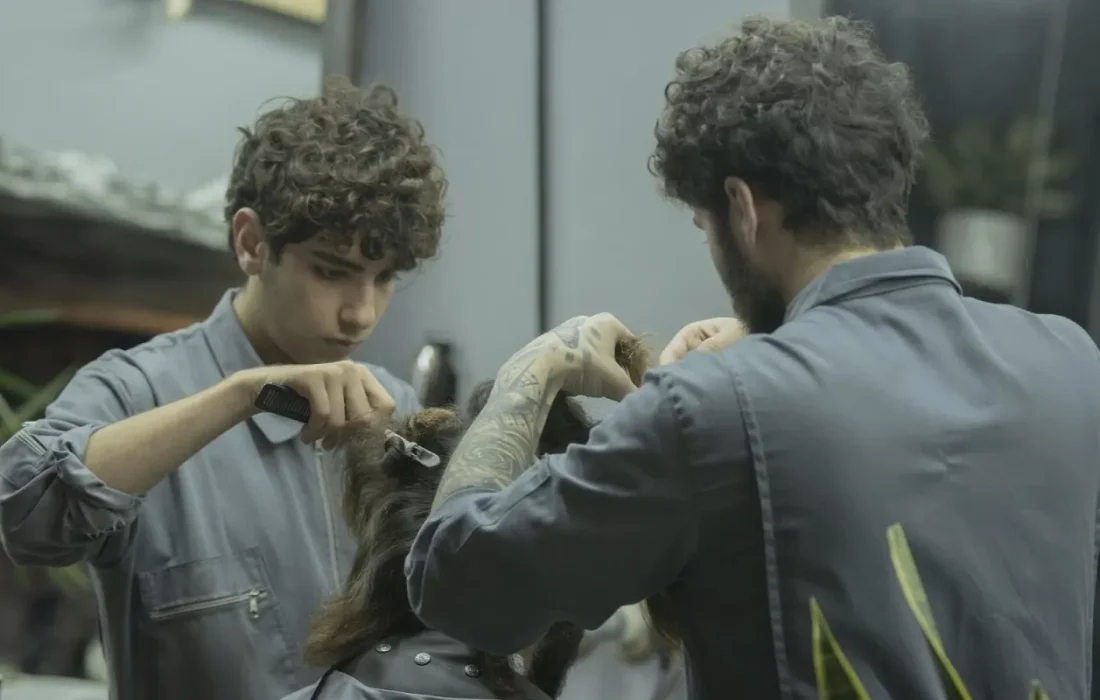
The right cut suits you not just in the mirror, but on rushed mornings too.
Sarah Bennett
Recommendations by face shape
Oval faces suit many cuts; here, hair texture is the deciding factor. On round faces, cuts that fall below the chin with light layers at the sides can make the face look longer. On square faces, soft layers and face-framing waves balance a strong jawline.
For heart-shaped faces, side-swept bangs that balance the forehead and cuts that add volume at the jawline work well. For long faces, bangs and volume at the sides can make the face look more balanced. These suggestions are a general roadmap; the final decision should take your hair texture and personal style into account.
Hair texture and daily routine
Fine hair can lose volume in layered cuts, while thick hair becomes lighter with layers and holds its shape more easily. For curly and wavy hair, dry-cutting techniques can help preserve the natural pattern. The growth direction at the crown and nape also affects how a cut sits.
| Topic | Hair |
|---|---|
| Highlights | haircut |
| Reading time | 5 minutes |
| Written by | Sarah Bennett |
Key takeaways
- You can find your face shape by pulling your hair back and looking at its overall outline.
- Choose a cut based on the features you want to balance.
- Hair texture and daily routine matter as much as face shape.
How much time you spend on your hair in the morning matters as much as your face shape when choosing a cut. A cut that needs a blow-dry can be a letdown for someone who doesn't blow-dry every day. Talking through your daily routine with your stylist before the cut is the quickest way to find a style that truly works for you.

2 Comments
Really useful piece, thank you for putting it together.
I had never thought about this side of it. Looking forward to a follow-up.